

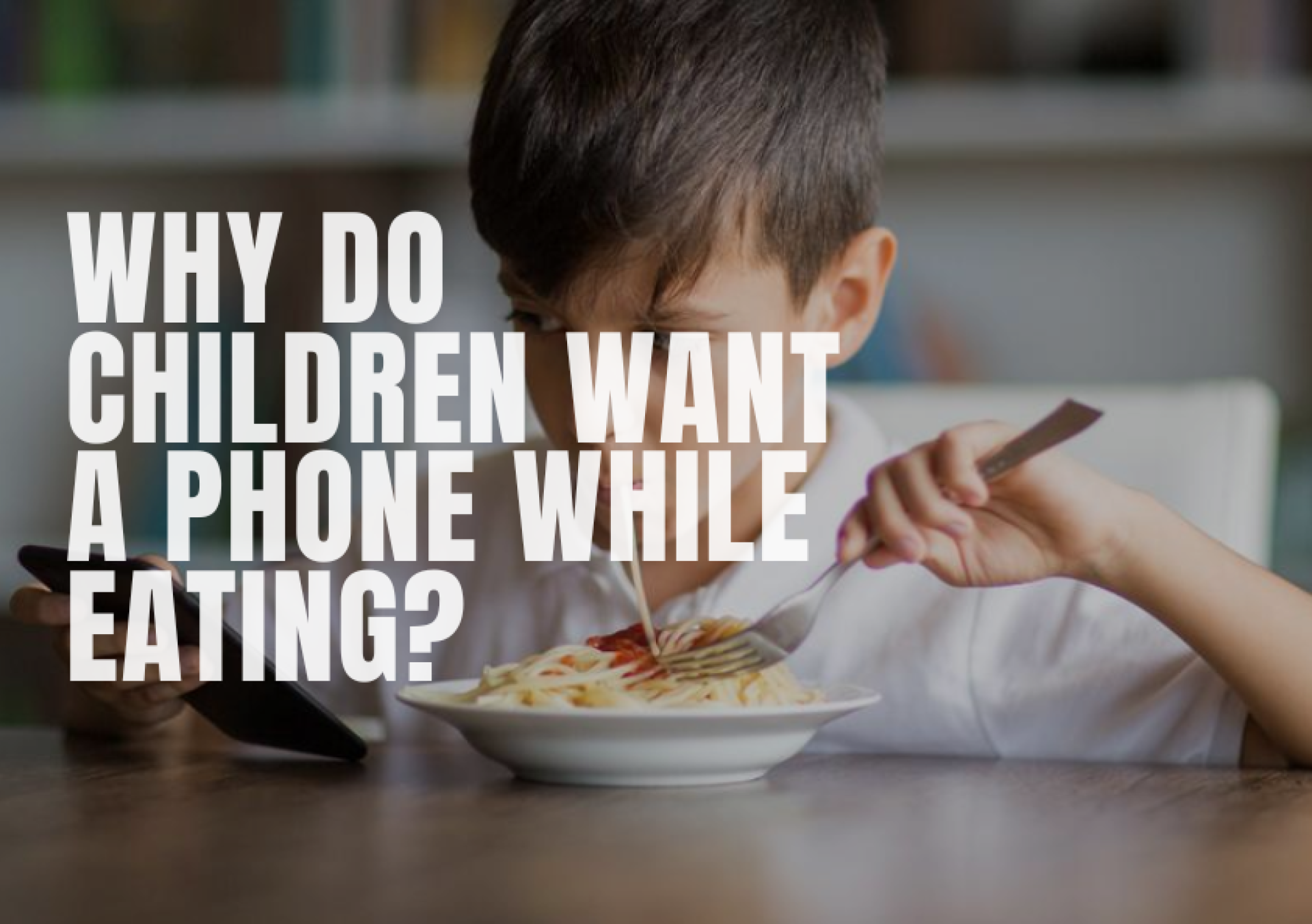
Why Do Children Want a Phone While Eating? Understanding the Habit and Its Impact
In many homes today, mealtime has quietly transformed. Instead of conversations, laughter, and mindful eating, many children now reach for a phone or tablet before taking a bite. What may seem like a harmless way to make children eat faster or with less resistance can gradually become a powerful habit shaped by the brain. Understanding why children want a phone while eating, and how it affects their health and behavior, is essential for parents and caregivers.
The Brain and the “Happy Feeling”
Children are not asking for screens during meals simply out of stubbornness. The brain plays a major role. Mobile phones provide instant entertainment ; bright visuals, fast movement, music, and rewards, all of which trigger the release of dopamine, often called the “happy chemical.” When a child watches something enjoyable while eating, the brain begins to associate food with pleasure from the screen, not from the act of eating itself.
Over time, the brain learns a simple formula: Food + Phone = Happiness. This conditioning makes children feel uncomfortable or uninterested in eating without a screen. What started as a quick solution to make feeding easier can slowly turn into a dependency.
Screens as a Distraction Tool
For many children, eating can sometimes feel overwhelming. New textures, smells, or tastes may cause discomfort, especially in younger kids or picky eaters. Screens act as a distraction, shifting attention away from the sensory experience of food. When children are absorbed in a video or game, they may eat without noticing what they are consuming. While this might seem helpful in the short term, it prevents children from developing a healthy relationship with food.
Mindful eating such as noticing taste, texture, hunger, and fullness is an important life skill. Screens interrupt this learning process.
When Habit Takes Over
Repeated behavior strengthens neural pathways in the brain. If a child is regularly given a phone during meals, the brain begins to expect it. Eventually, the child may refuse to eat without a screen, become irritated when it is removed, or lose interest in food unless entertained. This shows how quickly occasional screen use can turn into a deeply rooted habit.
As this pattern continues, children may stop paying attention to their body’s internal signals. They may not recognize when they are hungry or when they are full, leading to irregular eating patterns.
Eating Without Awareness
One of the most concerning effects of screen use during meals is mindless eating. When attention is focused on a phone, the brain does not fully register the act of eating. Children may chew less, eat too quickly, or continue eating beyond fullness. Because their focus is on the screen, they are less aware of taste and portion size.
Mindless eating can gradually lead to overeating or undereating. Some children may consume more calories than needed, while others may lose interest in food altogether and eat too little. Both situations can affect growth and nutrition.
Poor Hunger and Fullness Recognition
Children naturally learn to regulate food intake by listening to their bodies. They recognize hunger, eat, feel full, and stop. However, screens interfere with this internal communication. When distracted, children may ignore signals of fullness or fail to recognize hunger properly. Over time, this weakens their ability to self-regulate food intake.
This disruption can contribute to long-term problems such as unhealthy weight gain, poor digestion, and irregular appetite. Children who rely on screens while eating may also struggle to develop independence in eating habits.
Emotional and Behavioral Effects
Using phones during meals may also influence emotional development. Mealtime is traditionally a social activity; a time for bonding, communication, and learning family values. When screens replace interaction, children miss opportunities to develop language skills, emotional expression, and social connection.
Some children may also develop emotional dependence on screens. They may associate comfort, calmness, or reward with phone use, making it harder for them to eat peacefully without digital stimulation.
Building Healthier Eating Habits
Helping children eat in tune with their bodies is the ultimate goal. Gradual changes can make a big difference:
-
Create a screen-free mealtime routine where phones and tablets are kept away from the dining area.
-
Encourage mindful eating by talking about taste, texture, and colors of food.
-
Allow children to feel natural hunger before meals rather than forcing food.
-
Be patient with picky eating — repeated exposure to foods helps acceptance over time.
-
Model healthy behavior, as children often imitate adults.
Reducing screen use during meals may initially be challenging, especially if the habit is strong. However, consistency, patience, and positive reinforcement can help children relearn natural eating cues and develop a healthier relationship with food.
Conclusion
Children ask for phones while eating not because they are difficult, but because their brains quickly learn to associate screens with pleasure and comfort. While screens may make feeding easier in the short term, long-term use during meals can lead to mindless eating, poor hunger awareness, emotional dependence, and unhealthy habits. By encouraging mindful, screen-free meals, caregivers can support children in developing lifelong healthy eating behaviors and a stronger connection with their bodies.
References