

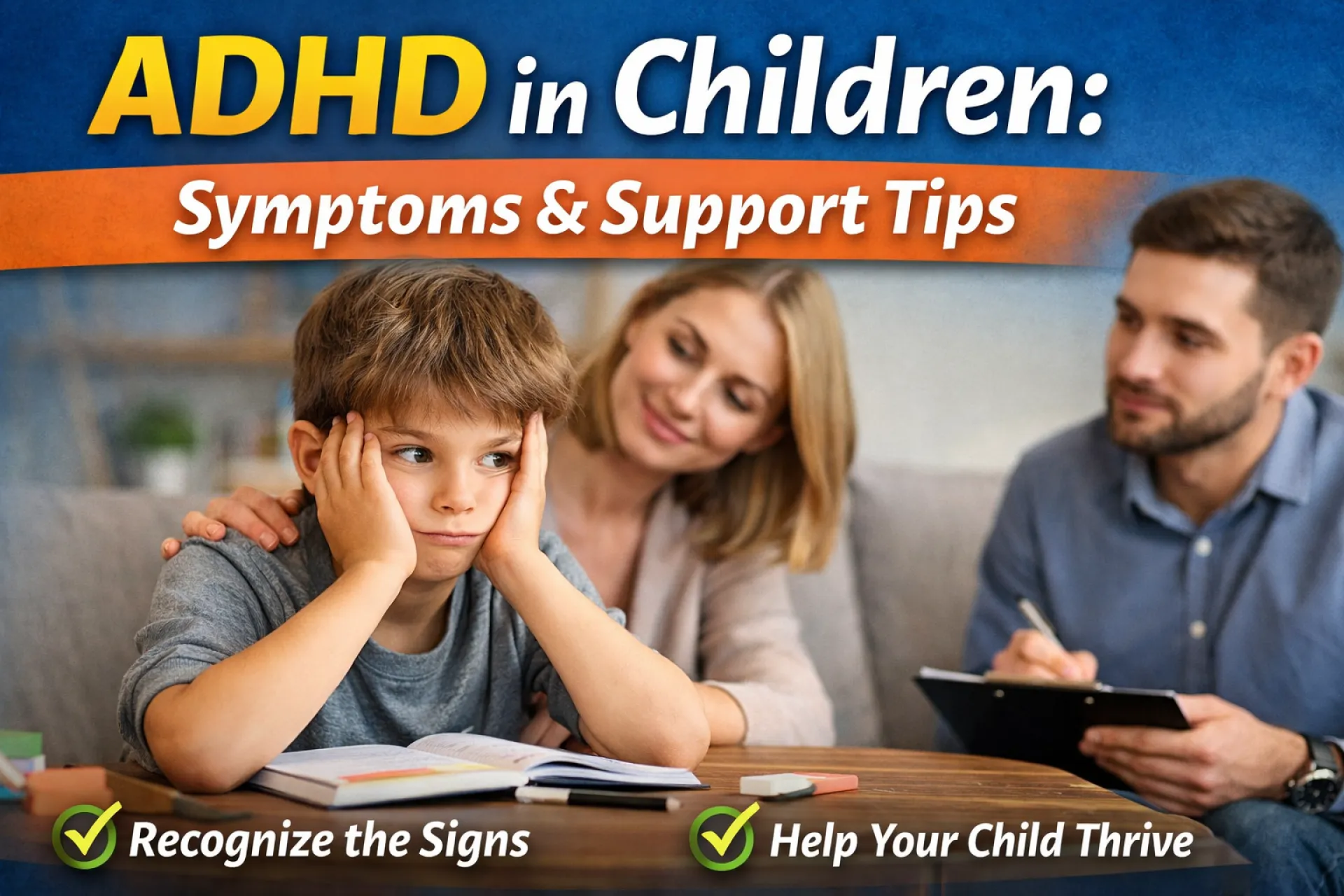
ADHD (Attention-Deficit/Hyperactivity Disorder) is a neurodevelopmental condition that affects how children think, behave, and regulate attention.
Children with ADHD may experience:
- Difficulty concentrating
- Impulsive decision-making
- Excessive physical movement or restlessness
It’s important to understand that ADHD is not caused by poor parenting or lack of discipline. It is linked to differences in brain development and function, particularly in areas responsible for attention and self-control.
Why Understanding ADHD Early Matters
Early identification and support can significantly improve a child’s:
- Academic performance
- Emotional well-being
- Social relationships
- Self-esteem
Without proper guidance, children with ADHD may struggle with frustration, anxiety, or behavioral challenges.
That’s why learning about ADHD in Children: Symptoms and Support Tips is essential for every parent, caregiver, and educator.
Common Symptoms of ADHD in Children
ADHD symptoms are generally grouped into three main categories:
1. Inattention
Children with inattention may:
- Struggle to stay focused on tasks or play activities
- Frequently make careless mistakes
- Seem not to listen when spoken to
- Avoid tasks that require sustained mental effort
- Lose items like homework, toys, or books
Example: Your child starts homework but quickly gets distracted by small noises or thoughts.
2. Hyperactivity
Hyperactive behavior may include:
- Constant fidgeting or squirming
- Difficulty staying seated
- Running or climbing excessively
- Talking excessively
Example: Your child cannot sit still during meals or classroom time.
3. Impulsivity
Impulsive behaviors may include:
- Interrupting conversations
- Blurting out answers
- Difficulty waiting for their turn
- Acting without thinking about consequences
Example: Your child grabs toys from others or interrupts frequently.
Types of ADHD
There are three main types:
1. Predominantly Inattentive Type
Mostly issues with focus and attention.
2. Predominantly Hyperactive-Impulsive Type
Mostly hyperactivity and impulsive behavior.
3. Combined Type
A mix of both inattentive and hyperactive symptoms (most common).
What Causes ADHD in Children?
While the exact cause is not fully known, research suggests:
- Genetics play a major role
- Brain structure and function differences
- Environmental factors (e.g., premature birth, prenatal exposure to toxins)
Important: ADHD is not caused by sugar, screen time, or bad parenting, though these can influence behavior.
When Should Parents Be Concerned?
All children can be energetic or distracted at times. However, consider seeking professional guidance if:
- Symptoms persist for more than 6 months
- Behavior impacts school performance
- Your child struggles socially or emotionally
- Teachers raise consistent concerns
Early support leads to better long-term outcomes.
How ADHD Is Diagnosed
Diagnosis typically involves:
- Behavioral observations
- Parent and teacher reports
- Developmental history
- Psychological assessments
A licensed professional such as a pediatrician, psychologist, or child psychiatrist usually makes the diagnosis.
ADHD in Children: Support Tips That Actually Work
Now let’s focus on practical, evidence-based strategies that help children thrive.
1. Create Structured Routines
Children with ADHD benefit from predictability.
Tips:
- Maintain consistent wake-up and bedtime routines
- Use visual schedules or charts
- Break tasks into smaller steps
Example: Instead of saying “get ready,” guide them step-by-step: brush teeth → get dressed → pack bag.
2. Use Positive Reinforcement
Focus on what your child does right.
Try this:
- Praise effort, not just results
- Use reward systems (stickers, tokens)
- Celebrate small wins
Example: “I love how you sat quietly for 5 minutes!”
3. Keep Instructions Clear and Simple
Children with ADHD can feel overwhelmed by long instructions.
Better approach:
- Give one instruction at a time
- Make eye contact
- Ask them to repeat instructions back
4. Design a Distraction-Free Environment
Reduce unnecessary stimuli.
At home:
- Create a quiet homework space
- Limit background noise (TV, loud music)
- Organize materials clearly
5. Encourage Physical Activity
Regular movement helps regulate energy and improve focus.
Ideas:
- Outdoor play
- Sports activities
- Short movement breaks during study time
6. Support Emotional Regulation
Children with ADHD may struggle with emotions.
Help them by:
- Teaching deep breathing techniques
- Naming emotions (“You seem frustrated”)
- Modeling calm behavior
7. Work Closely with Teachers
Collaboration is key.
Discuss:
- Classroom accommodations
- Seating arrangements
- Assignment modifications
Many schools in the US, UK, Canada, and Australia offer support plans tailored for children with ADHD.
8. Use Visual Aids and Tools
Visual supports improve understanding and independence.
Examples:
- Checklists
- Timers
- Color-coded folders
9. Limit Screen Time Thoughtfully
While screens are part of modern life, excessive use can worsen symptoms.
Balance is key:
- Set daily limits
- Encourage offline activities
- Monitor content quality
10. Consider Professional Support
Depending on your child’s needs, support may include:
- Behavioral therapy
- Parent training programs
- Educational support services
- Medication (if recommended by a doctor)
Always consult qualified professionals before making decisions.
Parenting a Child with ADHD: Real-Life Challenges
Parenting can feel overwhelming at times. You may experience:
- Frustration or burnout
- Social judgment
- Concerns about your child’s future
Remember: You are not alone, and support is available.
Building Your Child’s Strengths
Children with ADHD often have incredible strengths:
- Creativity
- High energy
- Curiosity
- Problem-solving skills
Nurturing these strengths is just as important as managing challenges.
ADHD Myths vs Facts
Myth: ADHD is just bad behavior
Fact: ADHD is a medical condition
Myth: Children outgrow ADHD
Fact: Symptoms may change, but support is still needed
Myth: Medication is the only solution
Fact: A combination of strategies works best
Long-Term Outlook
With the right support, children with ADHD can:
- Succeed academically
- Build strong relationships
- Develop confidence and independence
Many successful adults today were once children navigating ADHD.
Tips for Parents’ Self-Care
You can’t pour from an empty cup.
Take care of yourself:
- Seek support groups
- Take breaks when needed
- Practice stress management
A calm parent creates a calm environment.
Final Thoughts
Understanding ADHD in Children: Symptoms and Support Tips is the first step toward helping your child thrive.
Every child is unique. What works for one may not work for another,but with patience, consistency, and the right strategies, meaningful progress is absolutely possible.
You are your child’s strongest advocate,and your efforts truly make a difference.