

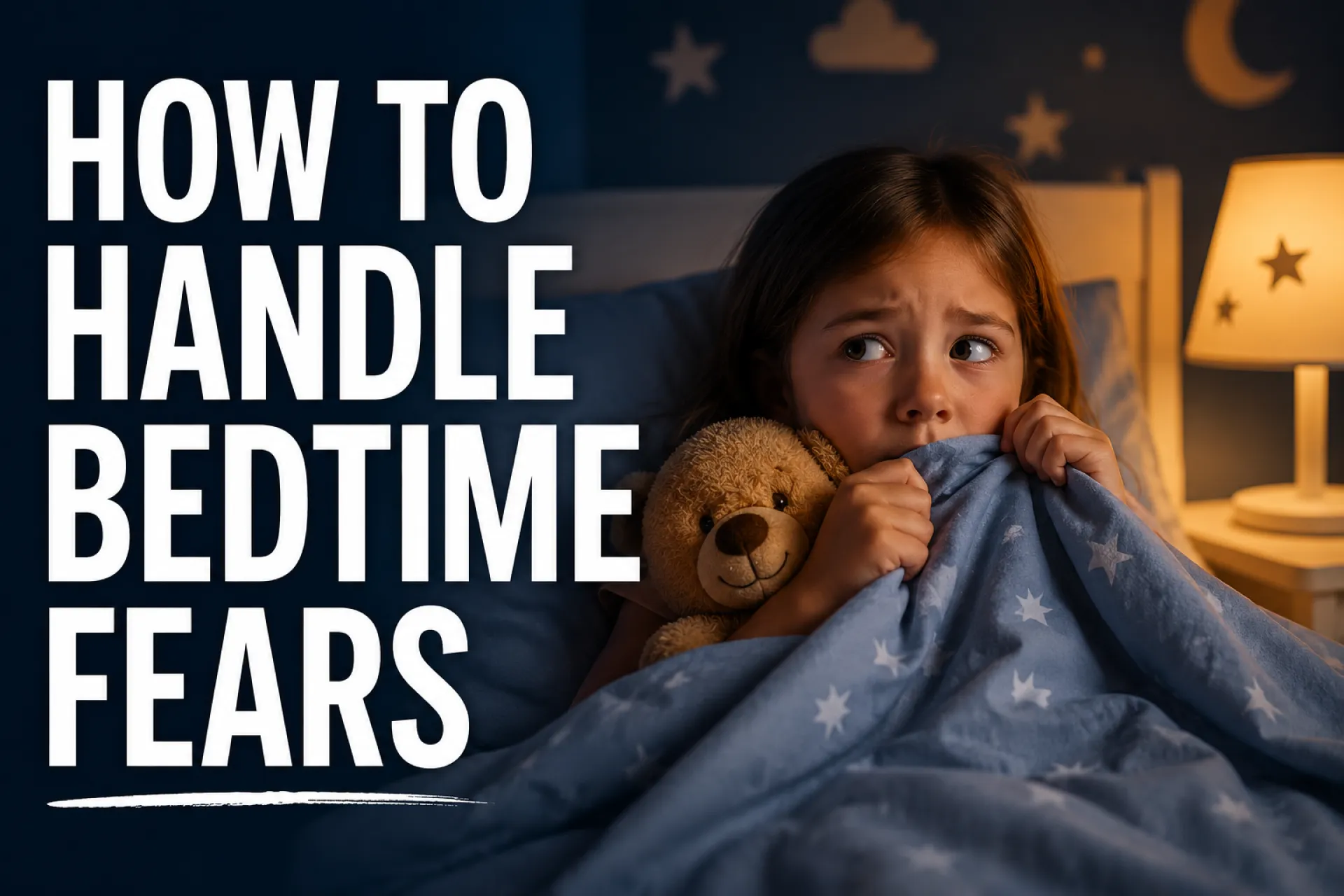
Children naturally experience fears as their brains grow and imagination develops. During the day, distractions and activities keep worries away. But at night, when everything becomes quiet, fears often feel bigger.
Young children are still learning the difference between imagination and reality. A shadow may look frightening. A dream may feel real. Even normal nighttime sounds can trigger anxiety.
Bedtime fears often increase during periods of:
- Starting school
- Moving homes
- Family stress
- Illness
- Changes in routine
- Exposure to scary media
- Separation from parents
For many children, bedtime is also the first time they must feel independent and emotionally secure without active parental presence.
Understanding this helps parents respond with empathy instead of frustration.
Common Bedtime Fears in Children
Different fears appear at different developmental stages.
Fear of the Dark
This is one of the most common childhood fears. Darkness limits a child’s ability to understand their environment, which can increase uncertainty and anxiety.
Children may worry about:
- Shadows
- Hidden creatures
- Being alone
- Strange noises
Fear of Monsters or Imaginary Creatures
Imagination grows rapidly between ages 3 and 8. Children may genuinely believe monsters exist under the bed or in the closet.
Even if the fear seems irrational to adults, it feels very real to the child.
Separation Anxiety at Bedtime
Some children fear being away from parents during the night. They may:
- Ask parents to stay in the room
- Wake repeatedly
- Cry when left alone
- Move into parents’ bed
This can become stronger after stressful events or major changes.
Fear After Nightmares
A vivid nightmare can make children afraid to sleep because they worry the dream will return.
Repeated nightmares can create bedtime resistance and anxiety around sleep itself.
Fear of Intruders or Safety Concerns
Older children sometimes develop realistic fears involving burglars, emergencies, or safety threats.
News exposure, movies, or overheard adult conversations can contribute to these fears.
Signs Your Child Has Bedtime Anxiety
Some children openly express fears, while others show indirect signs.
Watch for:
- Delaying bedtime repeatedly
- Complaints of stomachaches at night
- Crying during bedtime routine
- Frequent nighttime waking
- Needing excessive reassurance
- Refusing to sleep alone
- Increased clinginess
- Trouble falling asleep
These behaviors often indicate emotional distress rather than disobedience.
How to Handle Bedtime Fears Effectively
1. Stay Calm and Emotionally Supportive
Children look to parents for emotional cues. If a parent becomes frustrated or dismissive, the child’s anxiety may increase.
Instead:
- Speak calmly
- Validate feelings
- Offer reassurance
- Maintain patience
Say:
- “I know that feels scary.”
- “You are safe.”
- “I’m here to help you feel calm.”
Avoid:
- “There’s nothing to be afraid of.”
- “Stop acting like a baby.”
- “Big kids don’t get scared.”
Validation helps children feel emotionally secure.
2. Create a Consistent Bedtime Routine
Predictable routines reduce anxiety because children know what to expect.
A calming bedtime routine may include:
- Bath time
- Pajamas
- Brushing teeth
- Reading a story
- Gentle conversation
- Relaxation exercises
- Goodnight hugs
Consistency builds emotional safety and signals the brain that it is time to sleep.
Best Bedtime Routine Tips
- Keep bedtime consistent
- Reduce screen time 1–2 hours before bed
- Dim lights gradually
- Avoid stimulating activities
- Use calming music or white noise
Children thrive with structure.
3. Teach Children About Feelings
Many children do not yet have the language to explain fear.
Help them identify emotions by asking:
- “What feels scary tonight?”
- “What are you thinking about?”
- “Where do you feel fear in your body?”
Teaching emotional vocabulary improves emotional regulation over time.
4. Use Comfort Objects
Comfort objects can help children feel secure.
Examples include:
- Stuffed animals
- Blankets
- Family photos
- Soft pillows
- Night lights
These items create emotional familiarity and safety.
A small bedtime comfort ritual can make a major difference.
5. Avoid Reinforcing Fear
Parents sometimes unintentionally strengthen fears.
For example:
- Checking repeatedly for monsters
- Spraying “monster spray”
- Allowing endless reassurance loops
While these actions may calm a child temporarily, they can reinforce the idea that danger is real.
Instead:
- Acknowledge the fear
- Reassure safety
- Encourage confidence
Say:
- “Your imagination is powerful.”
- “Your room is safe.”
- “You can handle this feeling.”
6. Teach Relaxation Techniques
Simple calming exercises help children regulate anxiety naturally.
Deep Breathing
Teach children to:
- Breathe in slowly through the nose
- Hold briefly
- Exhale slowly
You can call it:
- Balloon breathing
- Dragon breathing
- Bubble breathing
Progressive Muscle Relaxation
Ask children to:
- Tighten muscles gently
- Relax slowly
This reduces physical tension.
Guided Imagery
Help children imagine:
- A peaceful beach
- A cozy cabin
- Floating clouds
- Safe magical places
Visualization supports emotional calmness.
The Role of Sleep in Child Mental Health
Sleep affects:
- Emotional regulation
- Attention
- Learning
- Mood
- Brain development
Children who experience chronic sleep disruption may struggle with:
- Irritability
- Anxiety
- Difficulty concentrating
- Behavioral challenges
Addressing bedtime fears early supports healthy emotional development.
Best Night Lights for Bedtime Anxiety
Many children feel safer with low lighting.
Helpful options include:
- Warm-toned night lights
- Adjustable brightness lights
- Soft projection lights
- Red or amber sleep lights
Avoid overly bright blue-toned lights because they can interfere with melatonin production.
What Parents Should Avoid
Avoid Punishment
Punishing children for bedtime fears often increases anxiety and shame.
Fear is an emotional response, not bad behavior.
Avoid Scary Content Before Bed
Limit exposure to:
- Horror movies
- Violent games
- Disturbing news
- Frightening social media videos
Children process information differently than adults.
Avoid Long Negotiations
Repeated bargaining can accidentally reinforce bedtime resistance.
Instead:
- Stay calm
- Keep boundaries predictable
- Offer reassurance briefly
How to Help Toddlers With Bedtime Fears
Toddlers need extra emotional reassurance because their imagination develops rapidly while emotional regulation skills remain limited.
Helpful toddler strategies:
- Short bedtime routines
- Gentle reassurance
- Soft lighting
- Comfort toys
- Predictable schedules
Avoid overstimulation before sleep.
Toddlers often respond well to physical closeness and calm parental presence.
How to Help School-Age Children With Sleep Anxiety
Older children benefit from:
- Problem-solving discussions
- Relaxation skills
- Journaling feelings
- Positive bedtime affirmations
- Understanding how imagination works
Teach phrases like:
- “I am safe.”
- “My body can relax.”
- “Nighttime is for rest.”
These build emotional confidence.
How to Handle Nightmares
Nightmares are common during childhood.
After a nightmare:
- Comfort the child calmly
- Validate emotions
- Avoid dramatic reactions
- Encourage slow breathing
- Help them feel safe returning to sleep
Some children benefit from:
- Drawing the dream
- Changing the ending
- Creating “safe stories”
This helps children regain a sense of control.
Should Children Sleep With Parents?
Many exhausted parents wonder whether co-sleeping is the best solution.
Short-term comfort may occasionally help during illness, stress, or major transitions. However, long-term dependence on parental presence can sometimes make independent sleep harder.
Every family situation is different.
The goal should be helping children gradually develop confidence and security in their own sleep environment.
When Bedtime Fears May Need Professional Support
Occasional bedtime fears are developmentally normal.
However, professional support may help if:
- Fear becomes intense
- Sleep disruption is severe
- Anxiety affects daytime functioning
- Panic symptoms appear
- Nightmares happen frequently
- Fear continues for many months
A pediatrician or licensed child mental health professional can assess whether additional support is needed.
Expert Tips for Peaceful Bedtimes
Keep Bedrooms Calm and Comfortable
Ideal sleep spaces are:
- Cool
- Quiet
- Dimly lit
- Free from overstimulation
Use Predictable Sleep Schedules
Consistent sleep times support healthy circadian rhythms.
Encourage Daytime Emotional Expression
Children who express feelings during the day often sleep better at night.
Encourage:
- Open conversations
- Creative play
- Drawing feelings
- Storytelling
Praise Brave Behavior
Notice small progress.
Say:
- “You stayed calm tonight.”
- “You handled that fear well.”
- “I’m proud of your bravery.”
Positive reinforcement builds resilience.
Bedtime Fears and Parenting Stress
Bedtime struggles can feel exhausting for parents.
Repeated night wakings, emotional meltdowns, and sleep deprivation affect the whole family.
Remember:
- Bedtime fears are common
- Most children outgrow them
- Emotional safety matters more than perfection
Progress may happen gradually.
Small, consistent changes usually work better than strict overnight solutions.
Frequently Asked Questions
Are Bedtime Fears Normal?
Yes. Bedtime fears are a normal part of child development, especially between ages 3 and 8.
What Causes Bedtime Anxiety?
Common causes include:
- Imagination development
- Stress
- Separation anxiety
- Nightmares
- Environmental changes
- Exposure to frightening content
Should I Ignore My Child’s Fear?
No. Ignoring fear may increase emotional distress.
Instead:
- Validate feelings
- Offer reassurance
- Maintain healthy sleep boundaries
Can Screen Time Cause Sleep Anxiety?
Yes. Excessive screen exposure, especially before bedtime, can increase anxiety and interfere with sleep quality.
How Long Do Bedtime Fears Last?
Most childhood bedtime fears improve with emotional support, healthy routines, and developmental maturity.
Final Thoughts on How to Handle Bedtime Fears
Learning how to handle bedtime fears requires patience, empathy, and consistency.
Children need to feel emotionally safe before they can fully relax into sleep. By creating predictable bedtime routines, validating emotions, teaching calming skills, and encouraging confidence, parents can help children build healthy lifelong sleep habits.
Every child is different. Some children overcome bedtime fears quickly, while others need more reassurance and time.
What matters most is creating a supportive environment where children feel heard, protected, and emotionally secure.
With calm guidance and consistent support, bedtime can gradually become peaceful again for the entire family.