

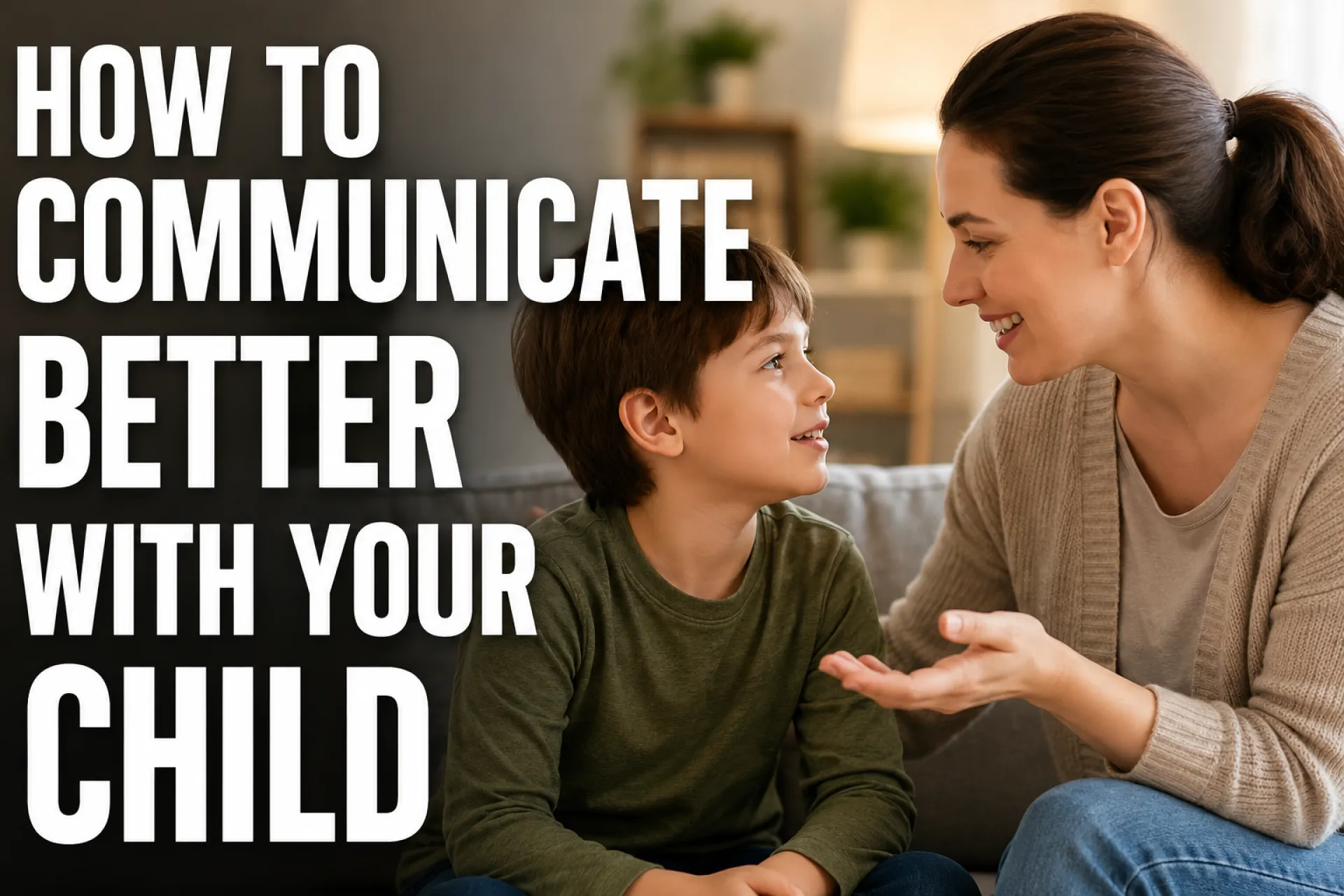
Healthy communication is one of the strongest predictors of emotional well-being in children. When children feel safe talking to their parents, they are more likely to:
- Develop strong self-esteem
- Handle stress better
- Perform better academically
- Build healthier friendships
- Avoid risky behaviors
- Express emotions in positive ways
Poor communication, on the other hand, can lead to misunderstandings, emotional distance, anxiety, behavioral issues, and family conflict.
Learning how to communicate better with your child is not about becoming a perfect parent. It’s about creating trust, emotional safety, and mutual respect.
1. Become an Active Listener
One of the biggest communication mistakes parents make is listening to respond instead of listening to understand.
Children quickly notice when adults are distracted, judgmental, or impatient. Active listening helps your child feel valued and emotionally safe.
How to Practice Active Listening
- Put away your phone or laptop
- Maintain eye contact
- Avoid interrupting
- Repeat back what your child says
- Ask follow-up questions
- Validate their emotions
Example
Instead of saying:
“That’s not a big deal.”
Try:
“That sounds really frustrating. Tell me more about what happened.”
This small shift helps children feel understood rather than dismissed.
2. Create Daily Conversation Time
Strong communication does not happen only during serious discussions. It develops through small daily interactions.
Children open up more when communication becomes a normal part of everyday life rather than something connected only to discipline or problems.
Easy Ways to Build Daily Conversations
- Talk during meals
- Ask questions during car rides
- Read together before bedtime
- Go for short walks
- Discuss school experiences casually
- Share stories from your own childhood
Even 10–15 minutes of focused conversation each day can strengthen emotional connection.
3. Use Positive and Respectful Language
Children learn communication habits by observing their parents. The tone you use becomes the tone your child often adopts later in life.
Respectful communication teaches emotional regulation and problem-solving skills.
Replace Negative Phrases With Constructive Alternatives
| Avoid Saying | Try Saying Instead |
|---|---|
| “Stop crying.” | “I can see you’re upset.” |
| “You never listen.” | “Let’s work on listening together.” |
| “Because I said so.” | “Here’s why this rule matters.” |
| “You’re being difficult.” | “Let’s figure this out calmly.” |
Positive communication reduces defensiveness and encourages cooperation.
4. Validate Your Child’s Feelings
Children need emotional validation even when their emotions seem irrational to adults.
When parents minimize feelings, children may stop expressing emotions openly.
Emotional Validation Examples
- “I understand why you feel disappointed.”
- “That must have been embarrassing.”
- “It’s okay to feel nervous.”
- “I’d probably feel upset too.”
Validation does not mean agreeing with every behavior. It simply means acknowledging the emotion behind it.
This is one of the most effective techniques for parents learning how to communicate better with your child.
5. Avoid Overreacting
Children are less likely to communicate honestly if they fear punishment, criticism, or anger.
When parents react aggressively, children often hide mistakes, emotions, or concerns.
How to Stay Calm During Difficult Conversations
- Take a deep breath before responding
- Pause before reacting emotionally
- Focus on solving the problem
- Ask questions calmly
- Avoid yelling or sarcasm
Children need guidance, not fear.
A calm parent creates a safe environment where communication can continue even during conflict.
6. Learn Your Child’s Communication Style
Every child communicates differently.
Some children express themselves openly, while others need more time and encouragement.
Common Communication Styles in Children
Talkative Children
- Enjoy long conversations
- Process emotions verbally
- Need attentive listening
Quiet Children
- Prefer one-on-one discussions
- Open up gradually
- May communicate through behavior or art
Sensitive Children
- React strongly to criticism
- Need gentle communication
- Benefit from reassurance
Independent Children
- Prefer autonomy
- Respond better to collaborative conversations
Understanding your child’s personality improves communication dramatically.
7. Put Away Digital Distractions
Modern parenting often competes with screens, notifications, and busy schedules.
Children notice when parents are physically present but emotionally distracted.
Tips for More Focused Family Communication
- Create screen-free dinner times
- Put phones away during conversations
- Avoid multitasking while listening
- Schedule family activities without devices
Children are more likely to communicate openly when they feel they have your full attention.
8. Ask Open-Ended Questions
Many parents ask questions that lead to one-word answers.
For example:
“Did you have a good day?”
Usually results in:
“Fine.”
Instead, ask questions that encourage conversation.
Better Questions to Ask Children
- “What was the best part of your day?”
- “What made you laugh today?”
- “Did anything feel difficult today?”
- “Who did you spend time with at school?”
- “What’s something new you learned?”
Open-ended questions help children develop communication and emotional awareness skills.
9. Encourage Emotional Expression
Children need healthy ways to express emotions instead of suppressing them.
Parents who teach emotional vocabulary help children regulate feelings more effectively.
Teach Emotion Words
Help children identify emotions such as:
- Frustrated
- Disappointed
- Nervous
- Excited
- Lonely
- Proud
- Confused
The more children understand emotions, the easier communication becomes.
10. Communicate at Your Child’s Level
Children process information differently based on age and development.
Complex lectures often confuse younger children.
Age-Appropriate Communication Tips
Toddlers
- Use simple words
- Keep instructions short
- Use visual examples
School-Age Children
- Encourage questions
- Explain rules clearly
- Use stories and examples
Teenagers
- Respect independence
- Avoid constant lectures
- Listen more than you speak
Adjusting communication style based on age improves understanding and cooperation.
11. Build Trust Through Consistency
Trust is essential for open communication.
Children need to know that parents are reliable, supportive, and emotionally available.
Ways to Build Trust
- Keep promises
- Follow through consistently
- Admit mistakes
- Respect privacy appropriately
- Stay emotionally available
When children trust parents, they are more likely to seek guidance during difficult situations.
12. Avoid Comparing Your Child to Others
Comparisons damage self-esteem and communication.
Statements like:
“Why can’t you be more like your brother?”
often create resentment and emotional withdrawal.
Instead, focus on individual growth and strengths.
Better Alternatives
- “I’m proud of your effort.”
- “Everyone learns differently.”
- “Let’s focus on your progress.”
Positive reinforcement encourages healthier communication and confidence.
13. Practice Family Problem-Solving
Children learn valuable life skills when parents involve them in solving problems respectfully.
Collaborative discussions teach responsibility, empathy, and communication.
Example
Instead of imposing punishment immediately, try:
“What do you think would help solve this problem?”
This encourages accountability and critical thinking.
14. Be Careful With Criticism
Constant criticism can damage emotional connection.
Children who feel judged may stop sharing thoughts and feelings.
Focus on Behavior, Not Identity
Avoid:
“You’re lazy.”
Instead say:
“Let’s work on finishing homework earlier.”
Constructive feedback promotes growth without harming self-worth.
15. Spend One-on-One Time Together
Quality time creates stronger emotional bonds and naturally improves communication.
Children often open up during relaxed activities rather than formal conversations.
Ideas for Connection Time
- Baking together
- Playing sports
- Reading books
- Doing crafts
- Gardening
- Walking the dog
The goal is presence, not perfection.
16. Teach Respectful Disagreement
Healthy families allow respectful differences of opinion.
Children should feel safe expressing thoughts without fear of humiliation.
Encourage Statements Like
- “I feel differently because…”
- “Can I explain my perspective?”
- “I understand your point.”
Teaching respectful disagreement prepares children for healthy adult relationships.
17. Recognize Nonverbal Communication
Children communicate through body language, tone, and behavior.
A child who suddenly becomes withdrawn, irritable, or unusually quiet may be struggling emotionally.
Watch for Signs Like
- Avoiding conversation
- Changes in sleep
- Increased anger
- Social withdrawal
- Loss of interest in activities
Paying attention to nonverbal cues helps parents respond early to emotional needs.
18. Apologize When Necessary
Parents do not need to appear perfect.
Apologizing teaches accountability and emotional maturity.
Example
“I’m sorry I raised my voice earlier. I should have handled that better.”
Children learn humility, empathy, and respectful communication by observing adults.
19. Support Mental and Emotional Well-Being
Children today face academic stress, social pressure, bullying, anxiety, and online influences.
Creating open communication helps parents recognize emotional struggles early.
Encourage Conversations About
- Stress
- Anxiety
- Friendships
- School pressure
- Online safety
- Self-esteem
If concerns persist, professional support from a pediatrician or licensed child therapist may help.
20. Make Communication a Lifelong Habit
Learning how to communicate better with your child is an ongoing process.
Strong parent-child relationships are built gradually through daily effort, empathy, patience, and trust.
You do not need perfect conversations every day. What matters most is consistency, emotional safety, and genuine connection.
Children remember how parents made them feel long after specific conversations are forgotten.
Common Communication Mistakes Parents Should Avoid
Even loving parents sometimes unintentionally create communication barriers.
Frequent Mistakes Include
- Interrupting constantly
- Dismissing emotions
- Using shame or embarrassment
- Lecturing excessively
- Comparing siblings
- Ignoring nonverbal cues
- Using harsh criticism
- Reacting emotionally
Awareness is the first step toward healthier communication habits.
Benefits of Strong Parent-Child Communication
When families communicate effectively, children often experience:
- Better emotional regulation
- Higher confidence
- Stronger academic performance
- Healthier relationships
- Lower anxiety levels
- Improved behavior
- Better conflict-resolution skills
Parents also benefit from deeper trust, reduced conflict, and stronger family bonds.
Final Thoughts
If you want to know how to communicate better with your child, start with simple daily changes: listen actively, validate emotions, stay calm, and create meaningful connection time.
Children thrive when they feel respected, heard, and emotionally safe.
Perfect parenting does not exist, but supportive communication can transform family relationships in powerful ways.
By practicing empathy, patience, and consistency, parents can build lifelong trust and raise emotionally healthy, confident children prepared for the challenges of adulthood.