

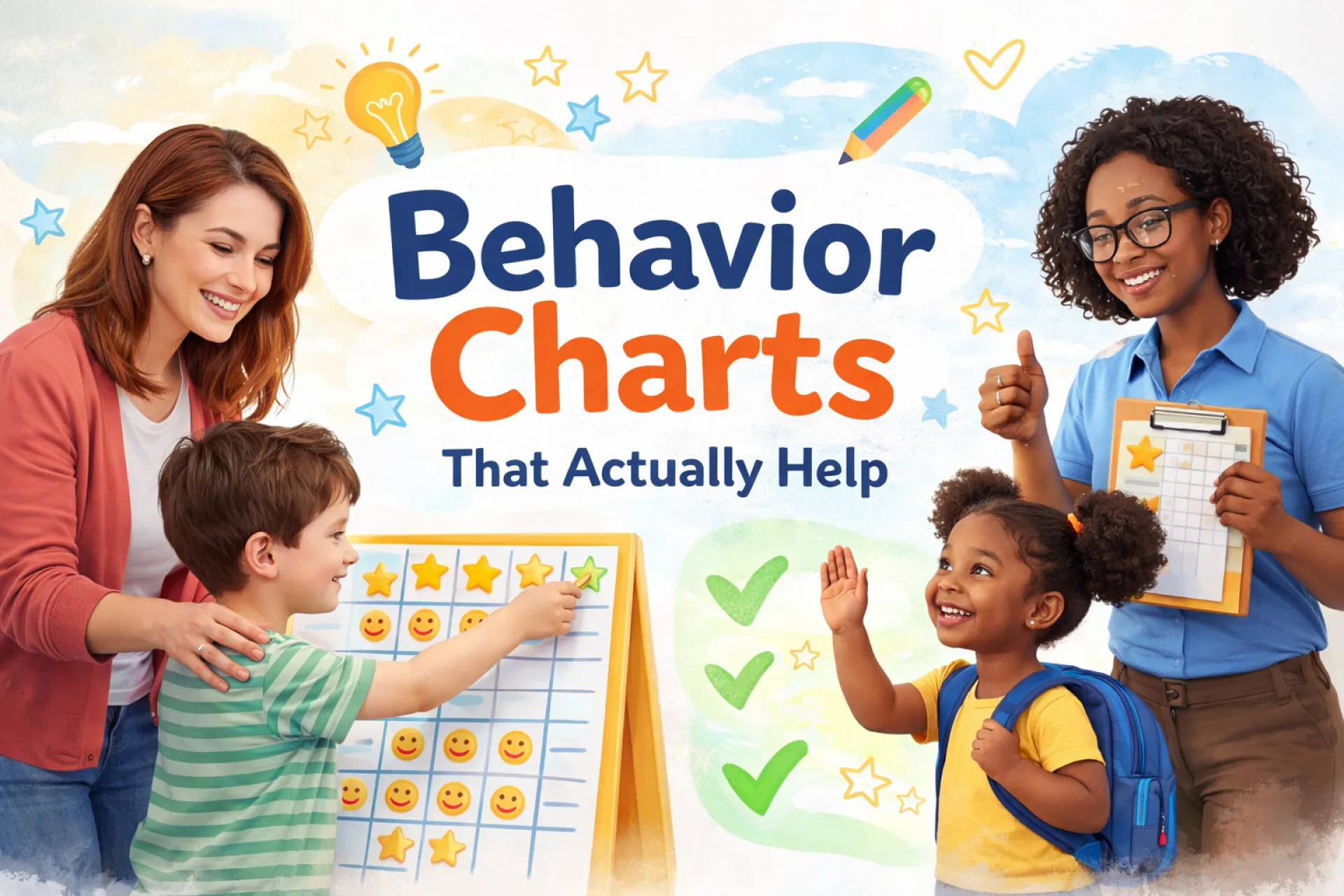
A behavior chart is a visual tool used to track and encourage positive behaviors in children. It usually includes:
-
A list of target behaviors
-
A tracking system (stickers, stars, points, or check marks)
-
Rewards or recognition for progress
Behavior charts are commonly used with children between ages 3 and 12, both at home and in classrooms.
Examples include:
-
Sticker charts
-
Star charts
-
Point systems
-
Token economies
-
Daily behavior report cards
The purpose of a behavior chart is simple: help children connect their actions with consequences and rewards.
But not every chart works the same way.
Why Many Behavior Charts Fail
Parents often try behavior charts but give up after a few weeks because they don't see results. In most cases, the issue isn't the concept it's the implementation.
Here are common reasons behavior charts fail:
1. Too Many Rules
Some charts include 10–15 behaviors at once, which overwhelms children. Young kids need clear and simple expectations.
Instead of listing many rules, focus on 1–3 key behaviors.
Example:
Bad chart:
-
Clean room
-
Do homework
-
Be nice
-
No yelling
-
Eat vegetables
-
Brush teeth
Better chart:
-
Use kind words
-
Follow directions
-
Clean up toys
Simple goals lead to better results.
2. Rewards That Are Too Big or Too Small
Rewards should be motivating but realistic.
If a child must behave perfectly for an entire week before earning a reward, they may lose motivation quickly.
On the other hand, rewards that are too easy reduce the sense of achievement.
Effective behavior charts provide small, frequent wins.
Example reward system:
-
1 sticker = praise
-
5 stickers = choose a family movie
-
10 stickers = small prize
This structure keeps children engaged.
3. Inconsistent Use
Consistency is critical.
If the chart is used one day but ignored the next, children will not take it seriously.
For behavior charts that actually help, parents and teachers should:
-
Track behavior daily
-
Provide immediate feedback
-
Celebrate progress regularly
Consistency builds trust and reinforces learning.
The Psychology Behind Behavior Charts
Behavior charts work because they use principles from behavioral psychology.
Specifically, they rely on positive reinforcement.
Positive reinforcement means rewarding a behavior so it becomes more likely to happen again.
For example:
Child cleans up toys → receives sticker → feels proud → repeats behavior.
Over time, the child develops internal motivation and positive habits.
Research in child development suggests that visual progress tracking also increases motivation. Children enjoy seeing their progress grow over time.
This is why charts are particularly effective for young learners.
How to Create Behavior Charts That Actually Help
To design an effective chart, follow these evidence-based steps.
1. Choose One Specific Behavior
Focus on behaviors that are:
-
Observable
-
Clear
-
Age-appropriate
Instead of vague goals like “be good,” use specific actions.
Examples:
-
Put toys away after playing
-
Use calm voice indoors
-
Finish homework before screen time
Clear expectations reduce confusion.
2. Involve the Child in the Process
Children are more motivated when they help create the chart.
Let them:
-
Choose stickers or colors
-
Decorate the chart
-
Help set rewards
Participation increases ownership and excitement.
3. Provide Immediate Feedback
Young children especially need quick feedback.
If a child completes a task, update the chart immediately.
Example:
Parent says:
"You cleaned up your toys right away. Great job! Let's add a star to your chart."
This reinforces the connection between behavior and reward.
4. Use Praise Along With Rewards
A common mistake is relying only on stickers or prizes.
Verbal encouragement is equally important.
Examples of effective praise:
-
"I love how you listened the first time."
-
"You worked really hard on your homework."
-
"That was a kind thing to do."
Praise helps build confidence and intrinsic motivation.
5. Gradually Reduce Rewards
The goal is not to depend on rewards forever.
Once the behavior becomes a habit, slowly reduce external rewards and focus more on praise and responsibility.
For example:
Week 1–2: Stickers for every success
Week 3–4: Stickers for consistent behavior
Week 5+: Mostly verbal recognition
This transition builds long-term habits.
Behavior Charts for Different Age Groups
Different ages require different strategies.
Toddlers (Ages 2–4)
Best approach:
-
Simple sticker charts
-
Immediate rewards
-
Focus on routines
Examples:
-
Brushing teeth
-
Cleaning up toys
-
Getting dressed
Visual charts work very well for toddlers.
Early Elementary (Ages 5–8)
Children at this age understand goals and progress.
Effective systems include:
-
Star charts
-
Weekly reward systems
-
Classroom behavior tracking
Common behaviors tracked:
-
Completing homework
-
Following instructions
-
Respectful communication
Older Kids (Ages 9–12)
Older children respond better to responsibility and privileges rather than stickers.
Effective options include:
-
Point systems
-
Privilege charts
-
Weekly allowance bonuses
Examples of rewards:
-
Extra screen time
-
Choosing dinner
-
Picking family activities
These rewards encourage accountability.
Behavior Charts at Home vs School
Behavior charts are used both by parents and educators, but their goals may differ slightly.
Home Behavior Charts
Focus on:
-
Household routines
-
Respectful communication
-
Responsibility
Examples:
-
Morning routines
-
Homework completion
-
Helping with chores
Classroom Behavior Charts
Teachers often use charts to improve:
-
Attention
-
Cooperation
-
Classroom participation
-
Following directions
Many U.S. classrooms also use group behavior charts to encourage teamwork.
Digital Behavior Charts: Do They Work?
Many parents today use apps instead of paper charts.
Popular digital systems include:
-
Parenting reward apps
-
Classroom management tools
-
Habit tracking apps
Benefits include:
-
Automatic tracking
-
Notifications
-
Easy progress reports
However, younger children still respond best to visual charts they can physically see, such as wall charts or whiteboards.
Common Mistakes to Avoid
Even well-designed charts can fail if these mistakes occur.
Avoid Punishment-Based Charts
Charts should emphasize positive behaviors, not shame or punishment.
Bad example:
-
Publicly displaying negative behavior
Better approach:
-
Focus on earning rewards for positive actions
Avoid Comparing Children
Each child develops differently.
Charts should measure individual progress, not competition.
Avoid Unrealistic Expectations
Children will make mistakes.
Behavior charts should encourage improvement, not perfection.
Progress matters more than flawless performance.
When Behavior Charts May Not Be Enough
Sometimes challenging behaviors may indicate deeper concerns such as:
-
Learning difficulties
-
Emotional stress
-
Developmental conditions
-
Attention challenges
If behavior issues persist despite consistent strategies, consider consulting:
-
Pediatricians
-
Child psychologists
-
School counselors
Professional guidance can help identify underlying causes.
Real-Life Example of a Successful Behavior Chart
A parent struggling with bedtime routines introduced a simple chart.
Target behavior:
-
Go to bed by 8:30 PM without arguing
Reward system:
-
1 star each night
-
5 stars = choose weekend activity
Within two weeks, bedtime resistance decreased significantly.
The child enjoyed seeing progress and felt proud of meeting the goal.
This illustrates how behavior charts that actually help focus on clear goals and consistent rewards.
Final Thoughts: Do Behavior Charts Really Work?
Yes—behavior charts can be powerful tools when used thoughtfully and consistently.
The key is focusing on:
-
Simple goals
-
Positive reinforcement
-
Consistency
-
Age-appropriate rewards
Behavior charts are not about controlling children. Instead, they help kids learn responsibility, build confidence, and develop lifelong habits.
When parents and teachers apply these strategies correctly, behavior charts that actually help can transform everyday challenges into opportunities for growth and learning.