

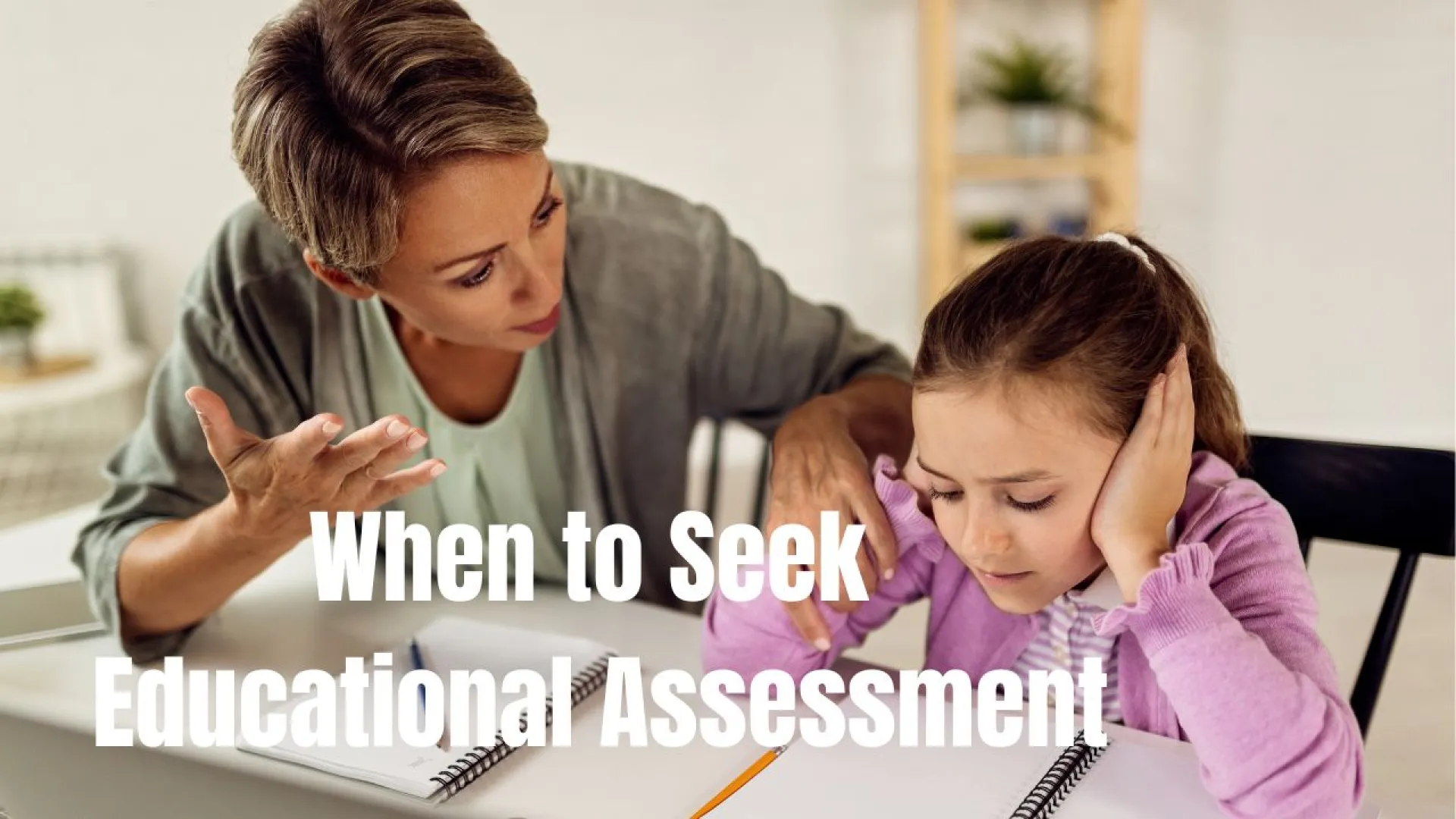
An educational assessment is a structured evaluation conducted by qualified professionals such as educational psychologists, school psychologists, or specialists.
It helps to:
- Identify learning difficulties
- Understand cognitive strengths and weaknesses
- Diagnose conditions like dyslexia, ADHD, or learning disabilities
- Guide personalized education plans
These assessments often include:
- Cognitive testing (IQ, memory, processing speed)
- Academic achievement testing
- Behavioral observations
- Parent and teacher interviews
Why Knowing When to Seek Educational Assessment Matters
Many parents delay seeking help, assuming their child will “catch up.” While patience is important, waiting too long can lead to:
- Academic struggles
- Low self-esteem
- Anxiety or behavioral issues
- Missed opportunities for early support
Early identification allows children to receive targeted help during critical developmental years.
Top Signs You Should Seek an Educational Assessment
1. Persistent Academic Struggles
If your child consistently struggles with:
- Reading
- Writing
- Math
- Understanding instructions
…despite extra help, it may indicate underlying learning difficulties.
👉 Example: A child in Grade 2 still unable to recognize basic sight words.
2. Significant Gap Between Effort and Performance
Does your child:
- Try hard but still underperform?
- Spend excessive time on homework?
- Feel frustrated despite effort?
This mismatch is a strong indicator that an assessment may be needed.
3. Delayed Developmental Milestones
Early signs can include:
- Late speech development
- Difficulty forming sentences
- Trouble understanding language
These may point to language processing issues.
4. Difficulty with Attention and Focus
If your child:
- Is easily distracted
- Cannot sit still
- Struggles to complete tasks
…it could indicate attention-related challenges such as ADHD.
5. Behavioral or Emotional Changes
Watch for:
- Frequent meltdowns during homework
- Avoidance of school
- Anxiety or withdrawal
Sometimes behavior is a response to academic frustration.
6. Teacher Concerns
Teachers are often the first to notice patterns. If a teacher suggests evaluation, take it seriously.
Common feedback includes:
- “Your child is not meeting grade expectations”
- “They struggle to follow instructions”
- “There may be a learning issue”
7. Difficulty with Reading and Writing
Signs may include:
- Reversing letters (b/d, p/q)
- Trouble sounding out words
- Poor spelling despite practice
These are common indicators of reading-related challenges.
8. Trouble with Memory and Organization
If your child:
- Frequently forgets instructions
- Loses school materials
- Struggles to stay organized
…it may be linked to executive functioning difficulties.
Age-Specific Indicators
Preschool (Ages 3–5)
- Limited vocabulary
- Difficulty following simple instructions
- Poor social interaction
Elementary School (Ages 6–11)
- Reading below grade level
- Struggles with basic math
- Avoidance of schoolwork
Middle & High School
- Difficulty with complex tasks
- Poor time management
- Declining grades
When to Seek Educational Assessment Immediately
You should not delay if:
- Your child is falling significantly behind peers
- There is a sudden drop in academic performance
- Emotional distress is increasing
- School recommends formal evaluation
Benefits of Early Educational Assessment
1. Early Intervention
The sooner challenges are identified, the easier they are to address.
2. Personalized Learning Plans
Assessments help create:
- Individualized Education Programs (IEPs)
- 504 Plans (in the US)
- Tailored learning strategies
3. Improved Confidence
Children feel more confident when they understand their challenges and receive support.
4. Better Academic Outcomes
Targeted strategies lead to improved performance over time.
5. Emotional Well-being
Reducing frustration helps prevent anxiety and behavioral issues.
How the Educational Assessment Process Works
Step 1: Initial Concern
Parent or teacher notices a problem.
Step 2: Consultation
Discuss concerns with:
- Teachers
- School counselors
- Pediatricians
Step 3: Formal Evaluation
Conducted by a qualified professional.
Step 4: Report and Diagnosis
You receive a detailed report outlining:
- Strengths
- Weaknesses
- Recommendations
Step 5: Intervention Plan
Schools and parents work together to support the child.
Educational Assessment in the US, UK, Canada, and Australia
United States
- Schools provide evaluations under IDEA
- IEPs and 504 Plans are common support systems
United Kingdom
- Education, Health and Care Plans (EHCP)
- SEN (Special Educational Needs) support
Canada
- Psychoeducational assessments widely used
- School boards offer support services
Australia
- Learning support plans
- Access to educational psychologists
Common Myths About Educational Assessment
Myth 1: “My child will grow out of it”
Some issues persist without intervention.
Myth 2: “Assessment labels my child”
It actually helps unlock support and understanding.
Myth 3: “Only severe cases need assessment”
Even mild challenges benefit from early support.
Myth 4: “It’s too expensive”
Many schools provide free or subsidized assessments.
What Parents Can Do Before Seeking Assessment
- Track your child’s progress
- Communicate with teachers
- Try structured routines at home
- Provide reading and learning support
How to Prepare Your Child for an Assessment
- Explain it in a positive way
- Avoid using words like “test”
- Emphasize that it helps teachers understand them better
Choosing the Right Professional
Look for:
- Licensed educational psychologists
- Experience with children
- Positive reviews or referrals
Questions to Ask Before Assessment
- What areas will be tested?
- How long will it take?
- What will the report include?
- How can results be used in school?
After the Assessment: What Next?
Once results are available:
- Meet with teachers
- Develop a support plan
- Monitor progress regularly
- Adjust strategies as needed
Red Flags Parents Should Never Ignore
- Child refuses to go to school
- Frequent complaints of stomach aches before school
- Sudden loss of interest in learning
- Extreme frustration with homework
These signs may indicate deeper issues.
Long-Term Impact of Ignoring Learning Difficulties
Without support, children may experience:
- Academic failure
- Low self-esteem
- Increased dropout risk
- Mental health challenges
Final Thoughts
Understanding when to seek educational assessment is one of the most important decisions a parent can make.
It’s not about labeling your child,it’s about empowering them.
Every child deserves the opportunity to learn in a way that works for them. With the right support, children can overcome challenges and thrive academically and emotionally.
If you notice persistent struggles, trust your instincts. Seeking help early can change the trajectory of your child’s life.