

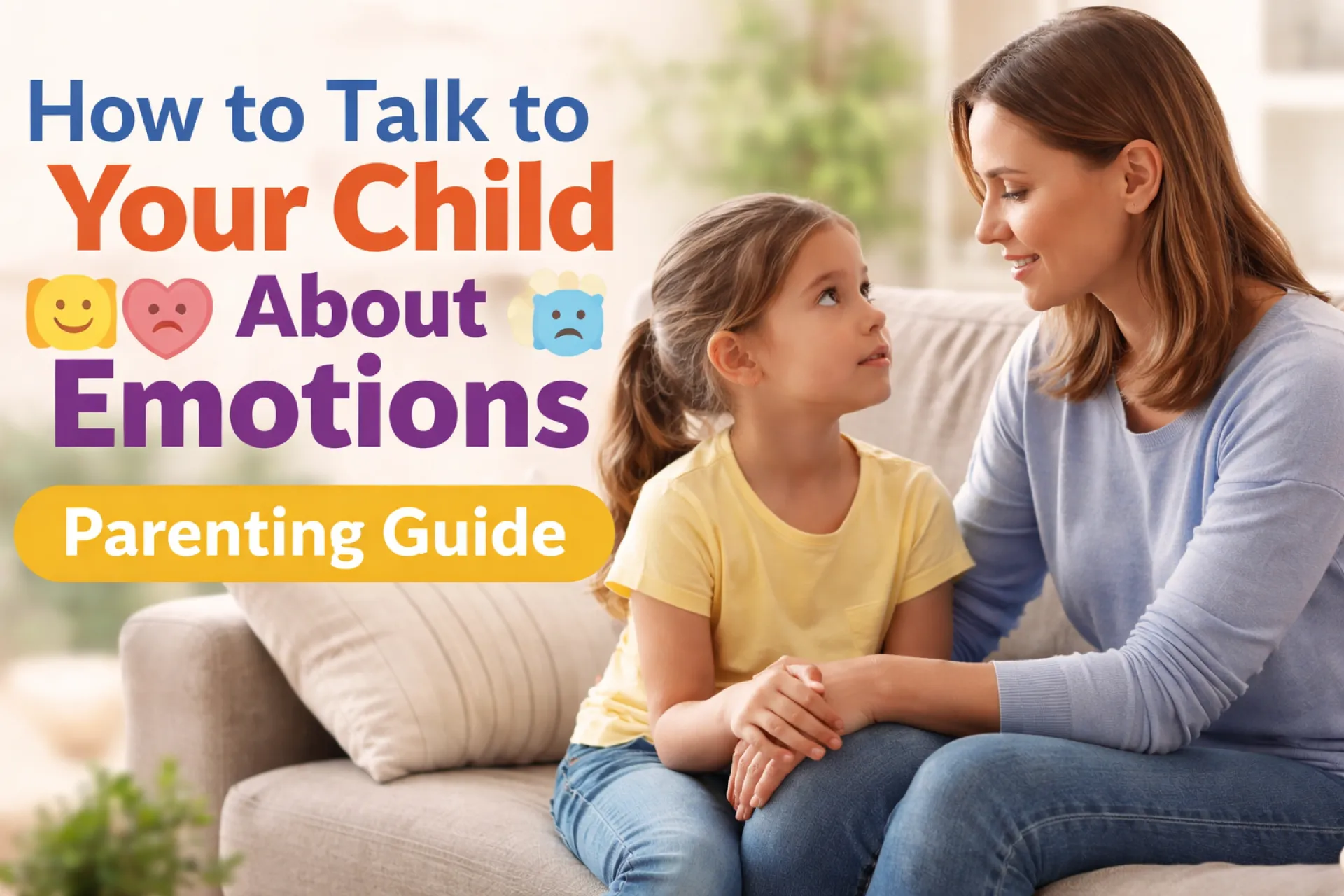
Parenting in today’s world is not just about providing food, shelter, and education. It’s also about raising emotionally intelligent children who can recognize, express, and regulate their feelings in healthy ways.
If you’ve ever wondered how to talk to your child about emotions without making it awkward, overwhelming, or confusing you’re not alone.
In the United States and other first-tier countries, emotional health has become a top parenting priority. According to organizations like the American Academy of Pediatrics and the Centers for Disease Control and Prevention, early emotional development significantly impacts academic success, relationships, and long-term mental well-being.
This guide will walk you through practical, research-backed strategies you can start using today.
Why Talking About Emotions Matters in Early Childhood
When children don’t understand their emotions, they often express them through:
-
Tantrums
-
Withdrawal
-
Aggression
-
Anxiety
-
Sleep issues
Teaching children to identify and express feelings builds:
-
Emotional intelligence
-
Resilience
-
Confidence
-
Stronger parent-child bonds
Learning how to talk to your child about emotions is not about turning them into mini therapists. It’s about giving them language and safety.
The Science Behind Emotional Development
Research in child psychology shows that emotional coaching in early years strengthens neural pathways responsible for emotional regulation.
The National Institute of Mental Health explains that children who can label emotions are less likely to develop anxiety and behavioral disorders later in life.
Emotional conversations activate parts of the brain responsible for:
-
Self-control
-
Empathy
-
Problem-solving
-
Decision-making
This makes emotional education a foundational life skill not a luxury.
Step 1: Start With Emotional Vocabulary
If you want to master how to talk to your child about emotions, begin with naming feelings.
Instead of saying:
“Stop crying.”
Try:
“I see you’re feeling sad.”
Instead of:
“Don’t be angry.”
Try:
“It looks like you’re feeling frustrated.”
Build a Feelings Word Bank
Start simple for toddlers:
-
Happy
-
Sad
-
Mad
-
Scared
For school-age kids:
-
Frustrated
-
Embarrassed
-
Nervous
-
Disappointed
-
Proud
The more words they know, the more control they gain.
Step 2: Normalize All Emotions (Even the Hard Ones)
Many parents unintentionally teach children that some emotions are “bad.”
But emotions are signals not problems.
When discussing how to talk to your child about emotions, remember:
-
Anger is not bad.
-
Sadness is not weakness.
-
Fear is not failure.
What matters is how we respond to emotions.
You can say:
“It’s okay to feel angry. It’s not okay to hit.”
This separates emotion from behavior—a powerful parenting shift.
Step 3: Practice Active Listening
Children open up when they feel heard.
Active listening means:
-
Making eye contact
-
Putting your phone away
-
Reflecting back what they say
Example:
Child: “Nobody played with me today.”
Parent:
“That must have felt lonely.”
This validates feelings without jumping to fix the problem.
Step 4: Model Emotional Expression
One of the most effective strategies for how to talk to your child about emotions is modeling it yourself.
Children learn more from what we do than what we say.
Try statements like:
-
“I’m feeling stressed today, so I’m going to take a deep breath.”
-
“I felt disappointed when my meeting was canceled.”
This teaches:
-
Emotional awareness
-
Healthy coping
-
Communication skills
Step 5: Create a Safe Emotional Environment at Home
Children share more when they feel safe.
Build emotional safety by:
-
Avoiding mockery or teasing
-
Not minimizing feelings (“That’s nothing to cry about.”)
-
Staying calm during emotional outbursts
A safe home environment reduces anxiety and improves long-term trust.
Step 6: Use Everyday Moments as Teaching Opportunities
You don’t need a formal “emotion talk.”
Natural opportunities include:
-
After a tough school day
-
During bedtime routines
-
After sibling conflict
-
Watching a movie together
Ask open-ended questions:
-
“How did that make you feel?”
-
“What do you think she was feeling?”
-
“What could we do next time?”
These small conversations compound over time.
Step 7: Teach Healthy Coping Strategies
Once your child can identify emotions, help them manage them.
Healthy coping skills include:
-
Deep breathing
-
Drawing feelings
-
Physical movement
-
Journaling (for older kids)
-
Quiet time
Avoid teaching avoidance like:
-
“Just ignore it.”
-
“It doesn’t matter.”
Instead, teach processing.
Step 8: Be Patient With Emotional Growth
Emotional regulation develops gradually.
Toddlers rely on co-regulation.
School-age kids begin self-regulation.
Teenagers need guidance but crave independence.
The American Psychological Association notes that emotional maturity continues developing into early adulthood.
Consistency is more important than perfection.
Common Mistakes Parents Make
When learning how to talk to your child about emotions, avoid these common pitfalls:
1. Fixing Too Quickly
Sometimes children want empathy, not solutions.
2. Shaming Emotional Expression
Statements like “Big boys don’t cry” damage emotional confidence.
3. Overreacting
Stay grounded. Your calm teaches calm.
4. Dismissing Feelings
Even if the issue seems small to you, it feels big to them.
How to Talk to Toddlers vs. School-Age Kids
Toddlers (Ages 2–4)
-
Keep sentences short
-
Use visual aids (emotion charts)
-
Label emotions frequently
Example:
“You’re mad because the toy broke.”
Elementary Kids (Ages 5–10)
-
Encourage storytelling
-
Ask reflective questions
-
Introduce problem-solving
Example:
“What could you try next time?”
Pre-Teens and Teens
-
Avoid lectures
-
Respect privacy
-
Use casual settings (car rides work well)
Emotional Conversations During Stressful Times
In the US, many children experience stress from:
-
Academic pressure
-
Social media
-
Bullying
-
Family changes
-
Global events
During difficult periods:
-
Offer reassurance
-
Provide factual information (age-appropriate)
-
Encourage open dialogue
If your child shows persistent anxiety, sleep issues, appetite changes, or withdrawal, consider consulting a licensed pediatrician or child psychologist.
When to Seek Professional Help
Talking about emotions is powerful but sometimes professional support is necessary.
Consider expert guidance if your child shows:
-
Extreme mood swings
-
Self-harm talk
-
Persistent sadness
-
Aggression beyond developmental norms
In the United States, you can start by speaking with your pediatrician or checking resources from the Substance Abuse and Mental Health Services Administration for local mental health services.
Seeking help is a sign of responsible parenting not failure.
Cultural Sensitivity in Emotional Parenting
Families in the US, UK, Canada, and Australia come from diverse cultural backgrounds. Some cultures traditionally discourage open emotional expression.
You can respect cultural values while still teaching:
-
Emotional awareness
-
Respectful expression
-
Healthy coping
Balance is key.
Benefits of Teaching Emotional Intelligence Early
Children who learn how to talk to their emotions early are more likely to:
-
Perform better academically
-
Form healthy friendships
-
Develop empathy
-
Avoid risky behaviors
-
Handle workplace stress as adults
Emotional intelligence is increasingly valued in schools and corporate environments across the US and UK.
Practical Daily Script Examples
Here are ready-to-use phrases:
-
“Tell me more about that.”
-
“That sounds really hard.”
-
“What did your body feel like when that happened?”
-
“What would help right now?”
-
“I’m here with you.”
Keep it simple. Keep it consistent.
Building Emotional Rituals at Home
Consider weekly check-ins:
Sunday Feelings Circle
-
Everyone shares one high and one low of the week.
Bedtime Reflection
-
“What was something that made you feel proud today?”
Emotion Chart Board
-
Kids move a magnet to show how they feel.
These rituals create structure and predictability.
Frequently Asked Questions (FAQ)
At what age should I start talking to my child about emotions?
As early as age two. Even toddlers benefit from hearing feelings labeled.
What if my child refuses to talk?
Don’t force it. Stay available. Model openness. Timing matters.
Can talking about emotions make my child more emotional?
No. Research shows that naming emotions reduces intensity, not increases it.
Final Thoughts: Parenting With Emotional Awareness
Learning how to talk to your child about emotions is not about perfect conversations.
It’s about:
-
Being present
-
Listening without judgment
-
Teaching vocabulary
-
Modeling calm
-
Offering consistent safety
In a world that moves fast and often feels overwhelming, emotional literacy is one of the greatest gifts you can give your child.
Start small. Stay consistent. Keep talking.