

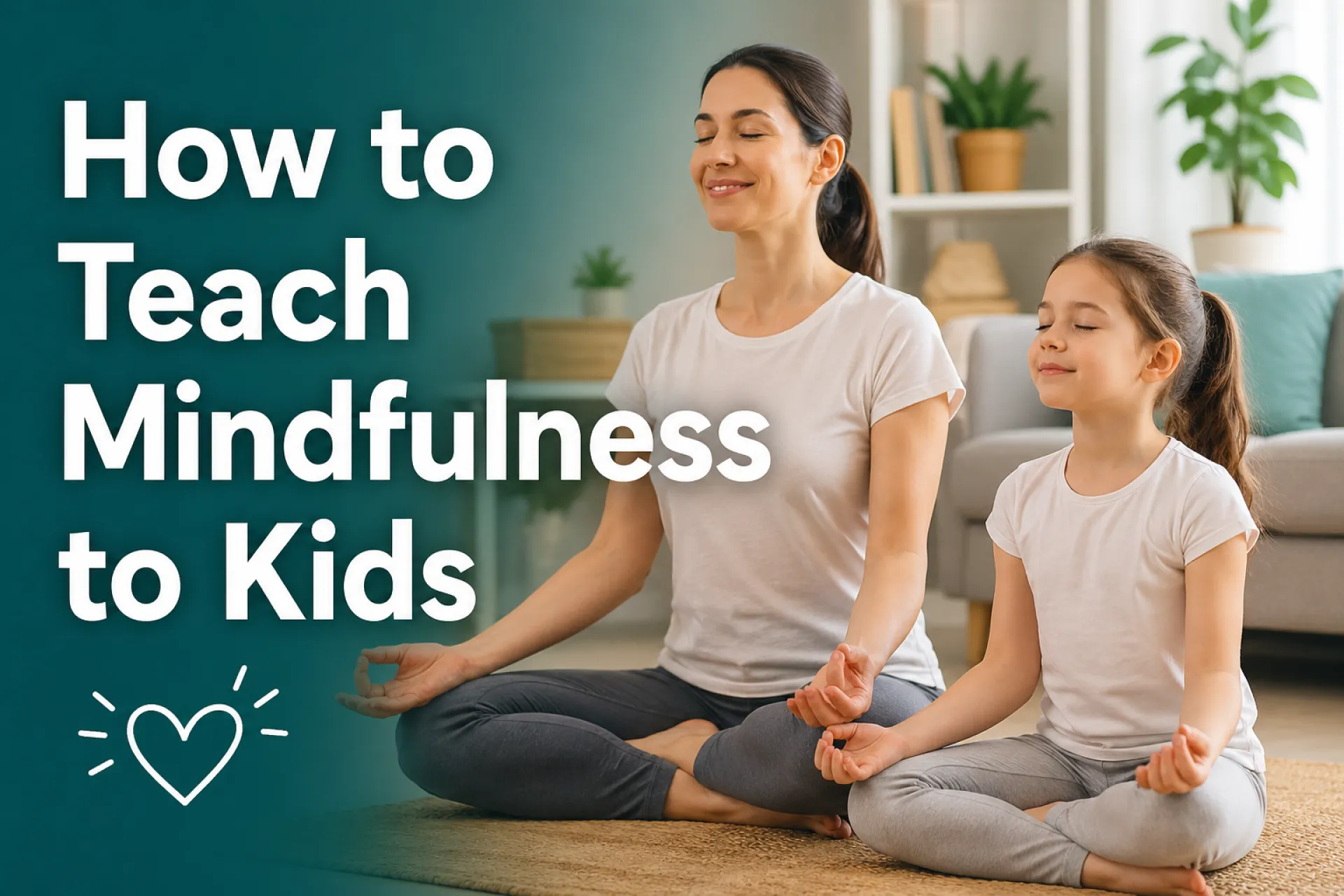
Mindfulness is the practice of paying attention to the present moment with curiosity and without judgment. For children, this means learning to notice their thoughts, feelings, and surroundings in a calm and focused way.
Instead of overcomplicating it, think of mindfulness as helping kids:
- Slow down
- Focus on “now”
- Understand their emotions
- Respond instead of react
Research shows that mindfulness can improve children’s attention span, emotional regulation, and even academic performance.
Why Teaching Mindfulness to Kids Matters
Before diving into how to teach mindfulness to kids, it’s important to understand why it matters.
1. Improves Emotional Regulation
Kids often struggle to express emotions like anger, frustration, or sadness. Mindfulness helps them pause and understand what they feel.
2. Reduces Anxiety and Stress
Studies in child psychology show that mindfulness reduces cortisol (stress hormone) levels in children.
3. Enhances Focus and Learning
Mindfulness strengthens attention control, which directly impacts school performance.
4. Builds Resilience
Children learn to bounce back from challenges rather than becoming overwhelmed.
5. Promotes Better Sleep
Mindfulness techniques calm the mind, helping kids sleep better.
When Should You Start Teaching Mindfulness?
You can start as early as age 3–5, but the approach should be age-appropriate.
- Toddlers (3–5 years): Simple breathing and sensory activities
- Young kids (6–9 years): Guided exercises and storytelling
- Pre-teens (10–12 years): Reflection and emotional awareness
- Teens: Independent mindfulness practice and journaling
The earlier you start, the more natural it becomes.
How to Teach Mindfulness to Kids (Step-by-Step)
1. Start With Simple Breathing Exercises
Breathing is the foundation of mindfulness.
Activity: Balloon Breathing
- Ask your child to imagine their belly is a balloon
- Inhale slowly through the nose
- Exhale through the mouth
Do this for 2–3 minutes daily.
👉 Tip: Keep it playful, not strict.
2. Use the 5-4-3-2-1 Grounding Technique
This is one of the most effective tools when learning how to teach mindfulness to kids.
Ask your child to notice:
- 5 things they can see
- 4 things they can feel
- 3 things they can hear
- 2 things they can smell
- 1 thing they can taste
This helps kids stay present and reduces anxiety quickly.
3. Practice Mindful Listening
Activity: Sound Awareness
- Ring a bell or play soft music
- Ask your child to listen carefully until the sound fades
This improves focus and patience.
4. Introduce Mindful Eating
Turn snack time into a mindfulness activity.
Example:
- Ask your child to notice the texture, smell, and taste of a raisin or fruit
- Encourage slow eating
This builds awareness and reduces impulsive behavior.
5. Teach Emotional Awareness
Children often don’t have the vocabulary to express feelings.
Activity: Name the Emotion
- Ask: “What are you feeling right now?”
- Help them label it: happy, sad, angry, nervous
Once named, emotions become easier to manage.
6. Use Guided Visualization
Kids love imagination, so use it.
Activity: Calm Place Visualization
- Ask your child to imagine a peaceful place (beach, forest, clouds)
- Guide them through what they see, hear, and feel
This reduces stress and promotes relaxation.
7. Create a Daily Mindfulness Routine
Consistency is key.
Start with:
- 5 minutes in the morning
- 5 minutes before bedtime
Even short sessions can make a big difference.
Fun Mindfulness Activities for Kids
To successfully implement how to teach mindfulness to kids, make it fun and engaging.
1. Mindful Coloring
Coloring helps kids focus and relax.
2. Gratitude Practice
Ask your child to name 3 things they are grateful for daily.
3. Body Scan Exercise
Guide them to notice sensations from head to toe.
4. Mindful Walking
Take a slow walk and notice surroundings.
5. Breathing Buddies
Place a soft toy on their belly and watch it rise and fall.
Common Mistakes to AvoidHow to Teach Mindfulness to Kids: Proven Techniques to Improve Focus, Reduce Anxiety & Build Emotional Strength
When learning how to teach mindfulness to kids, avoid these pitfalls:
❌ Forcing It
Mindfulness should feel natural, not like a punishment.
❌ Expecting Immediate Results
It takes time for children to develop awareness.
❌ Being Too Strict
Flexibility works better than rigid routines.
❌ Not Practicing Yourself
Kids learn by observing. If you’re mindful, they’ll follow.
Evidence-Based Benefits of Mindfulness in Children
Scientific research from institutions in the US and UK highlights:
- Improved attention and cognitive performance
- Reduced symptoms of ADHD
- Lower anxiety and depression levels
- Better social skills
Programs like school-based mindfulness interventions have shown measurable success in emotional well-being.
How Parents Can Model Mindfulness
Children imitate adults more than they listen.
You can model mindfulness by:
- Staying calm during stressful situations
- Practicing deep breathing openly
- Limiting screen time
- Being fully present when talking to your child
Mindfulness for Kids in a Digital Age
Kids today are exposed to constant digital stimulation.
To balance this:
- Set screen-free time daily
- Encourage outdoor play
- Replace screen time with mindful activities
How Long Does It Take to See Results?
Most parents notice changes within 2–8 weeks of consistent practice.
Improvements include:
- Better behavior
- Reduced tantrums
- Increased focus
However, mindfulness is a long-term skill, not a quick fix.
Is Mindfulness Safe for All Kids?
Yes, mindfulness is generally safe.
However:
- Children with trauma or severe anxiety may need guidance from a child psychologist
- Keep practices gentle and age-appropriate
Expert Tips for Teaching Mindfulness to Kids
- Keep sessions short (5–10 minutes)
- Use storytelling and play
- Be patient and consistent
- Celebrate small progress
- Avoid criticism
Final Thoughts
Learning how to teach mindfulness to kids is one of the most valuable investments you can make in your child’s future. It equips them with lifelong skills to handle stress, build emotional intelligence, and stay focused in a chaotic world.
The key is consistency, patience, and making mindfulness a natural part of daily life,not a forced activity.
Start small. Stay consistent. And most importantly, lead by example.