
Early Childhood Education Course in Nepal: Complete Guide for Aspiring Educators in 2026
Early Childhood Education Course in Nepal: Building the Foundation for Future Learning
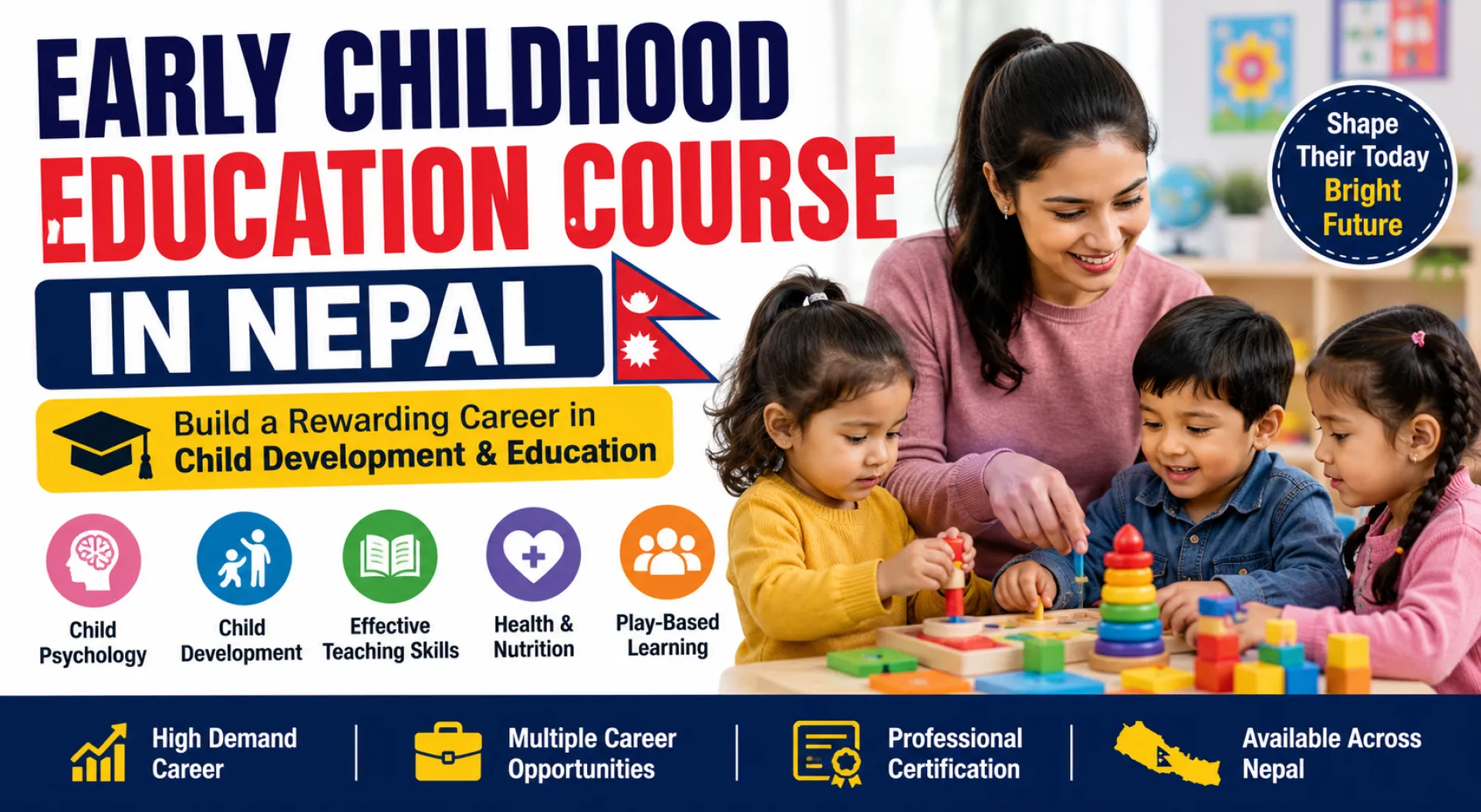
The demand for qualified early childhood educators is growing rapidly across Nepal. As parents, schools, and policymakers increasingly recognize the importance of quality education during a child's formative years, enrolling in an Early Childhood Education Course in Nepal has become an excellent career choice for aspiring teachers and education professionals.
Early childhood education focuses on the development and learning of children from birth to around eight years of age. Research consistently shows that the early years play a crucial role in shaping a child's cognitive, social, emotional, and physical development. Because of this, trained educators who understand child psychology, learning methodologies, and classroom management are highly valued in schools, preschools, and educational institutions throughout Nepal.
In this comprehensive guide, we will explore everything you need to know about pursuing an Early Childhood Education Course in Nepal, including course benefits, eligibility criteria, career opportunities, skills gained, and why this field is becoming increasingly important in the Nepalese education system.
What is an Early Childhood Education Course?
An Early Childhood Education (ECE) course is a specialized training program designed to equip educators with the knowledge and practical skills needed to support the growth and development of young children.
The course typically covers:
-
Child growth and development
-
Educational psychology
-
Classroom management
-
Child-centered teaching methods
-
Early literacy and numeracy
-
Health, safety, and nutrition
-
Creative arts and play-based learning
-
Parent-teacher communication
-
Inclusive education practices
Students enrolled in an Early Childhood Education Course in Nepal learn how to create engaging learning environments that foster curiosity, creativity, and confidence among young learners.
Why Early Childhood Education Matters in Nepal
Nepal's education sector has undergone significant transformation over the past decade. With increasing awareness of child development and international educational standards, schools are investing heavily in early childhood education programs.
Studies from organizations such as UNESCO and UNICEF have consistently highlighted that quality early childhood education contributes to:
-
Improved academic performance
-
Better social skills
-
Enhanced language development
-
Increased school readiness
-
Higher graduation rates
-
Better long-term career outcomes
In Nepal, many private and community schools now prioritize trained early childhood educators who can effectively support children's learning during their critical developmental years.
Benefits of Pursuing an Early Childhood Education Course in Nepal
1. Growing Career Opportunities
The education sector in Nepal continues to expand, creating numerous opportunities for qualified educators. Schools, Montessori institutions, daycare centers, and educational organizations actively seek professionals trained in early childhood education.
2. Meaningful and Rewarding Career
Teaching young children offers the opportunity to make a lasting impact on their lives. Early childhood educators play a crucial role in shaping children's attitudes toward learning and helping them develop essential life skills.
3. Professional Development
An Early Childhood Education Course in Nepal helps individuals develop expertise in child psychology, communication, curriculum planning, and educational leadership.
4. International Career Potential
Many early childhood education principles are globally recognized. Completing a reputable course can open opportunities in international schools and educational institutions both within Nepal and abroad.
5. Contribution to National Development
Quality education begins in the early years. By becoming a trained educator, you contribute directly to improving Nepal's education system and supporting future generations.
Eligibility for Early Childhood Education Courses in Nepal
Eligibility requirements may vary depending on the institution and program level. However, most courses generally require:
Certificate Programs
-
SEE or equivalent qualification
-
Interest in teaching and child development
Diploma Programs
-
Completion of +2 or equivalent education
-
Basic communication and interpersonal skills
Bachelor's Programs
-
Completion of higher secondary education
-
Institution-specific admission requirements
Some institutions may also conduct interviews or assessments to evaluate candidates' suitability for working with young children.
Core Subjects Covered in Early Childhood Education Courses
Students pursuing an Early Childhood Education Course in Nepal typically study a range of theoretical and practical subjects.
Child Development
Understanding developmental milestones across physical, cognitive, emotional, and social domains.
Educational Psychology
Learning how children think, learn, and interact within educational environments.
Curriculum Planning
Designing age-appropriate learning experiences that support holistic development.
Play-Based Learning
Exploring how play contributes to children's learning and development.
Language Development
Supporting communication, literacy, and language acquisition among young learners.
Classroom Management
Creating safe, structured, and positive learning environments.
Health and Nutrition
Understanding children's physical well-being and developmental needs.
Inclusive Education
Supporting diverse learners, including children with varying abilities and learning styles.
Essential Skills You Will Gain
Completing an Early Childhood Education course helps develop valuable professional skills such as:
Communication Skills
Educators must communicate effectively with children, parents, and colleagues.
Creativity
Young learners respond well to engaging and innovative teaching approaches.
Patience and Empathy
Understanding children's needs requires emotional intelligence and compassion.
Leadership Skills
Teachers often guide classroom activities and collaborate with educational teams.
Problem-Solving Abilities
Managing classroom situations requires quick thinking and adaptability.
Observation and Assessment
Monitoring children's progress and identifying developmental needs are critical responsibilities.
Career Opportunities After Completing an Early Childhood Education Course in Nepal
Graduates can pursue various roles in the education sector.
Preschool Teacher
Teach foundational skills and facilitate learning activities for young children.
Montessori Teacher
Implement Montessori-based educational methods in specialized learning environments.
Child Development Facilitator
Support developmental programs and educational initiatives.
Daycare Supervisor
Manage childcare centers and oversee children's daily activities.
Curriculum Developer
Assist educational organizations in designing learning materials and programs.
Educational Consultant
Provide guidance on child development and early learning strategies.
School Administrator
Manage operations within educational institutions.
The increasing number of private schools and educational institutions across Nepal has significantly expanded employment opportunities for qualified early childhood educators.
The Future of Early Childhood Education in Nepal
The future of early childhood education in Nepal appears highly promising. Government initiatives, educational reforms, and growing public awareness continue to strengthen the sector.
Several factors are driving demand:
-
Expansion of private schools
-
Increased parental awareness
-
Focus on quality education
-
Growing adoption of international curricula
-
Rising demand for trained educators
As Nepal continues to modernize its education system, professionals with specialized training in early childhood education will remain in high demand.
Choosing the Right Early Childhood Education Course in Nepal
When selecting a course, consider the following factors:
Accreditation
Choose institutions recognized by relevant educational authorities.
Curriculum Quality
Ensure the course includes both theoretical and practical components.
Experienced Faculty
Qualified instructors can significantly enhance learning outcomes.
Practical Training
Fieldwork and teaching practice are essential components of professional preparation.
Career Support
Some institutions offer placement assistance and career guidance services.
Reputation
Research the institution's track record and graduate success stories.
Why Early Childhood Educators Are More Important Than Ever
Children today face a rapidly changing world. Early childhood educators help develop critical thinking, creativity, communication, and emotional intelligence from a young age.
Through structured learning experiences and nurturing environments, educators help children build confidence, independence, and a lifelong love of learning.
Investing in professional training through an Early Childhood Education Course in Nepal not only enhances career prospects but also contributes to the broader goal of improving educational quality nationwide.
Conclusion
Pursuing an Early Childhood Education Course in Nepal is an excellent choice for individuals passionate about teaching, child development, and making a meaningful impact on society. With increasing demand for qualified educators, expanding career opportunities, and growing recognition of the importance of early learning, this field offers both personal fulfillment and professional growth.
Whether you aspire to become a preschool teacher, Montessori educator, curriculum developer, or educational leader, early childhood education provides a strong foundation for a rewarding career. As Nepal continues to prioritize quality education and child development, trained professionals in this field will play an essential role in shaping the nation's future.
If you are considering a career in education, now is an ideal time to explore an Early Childhood Education Course in Nepal and begin your journey toward becoming a skilled and impactful educator.