

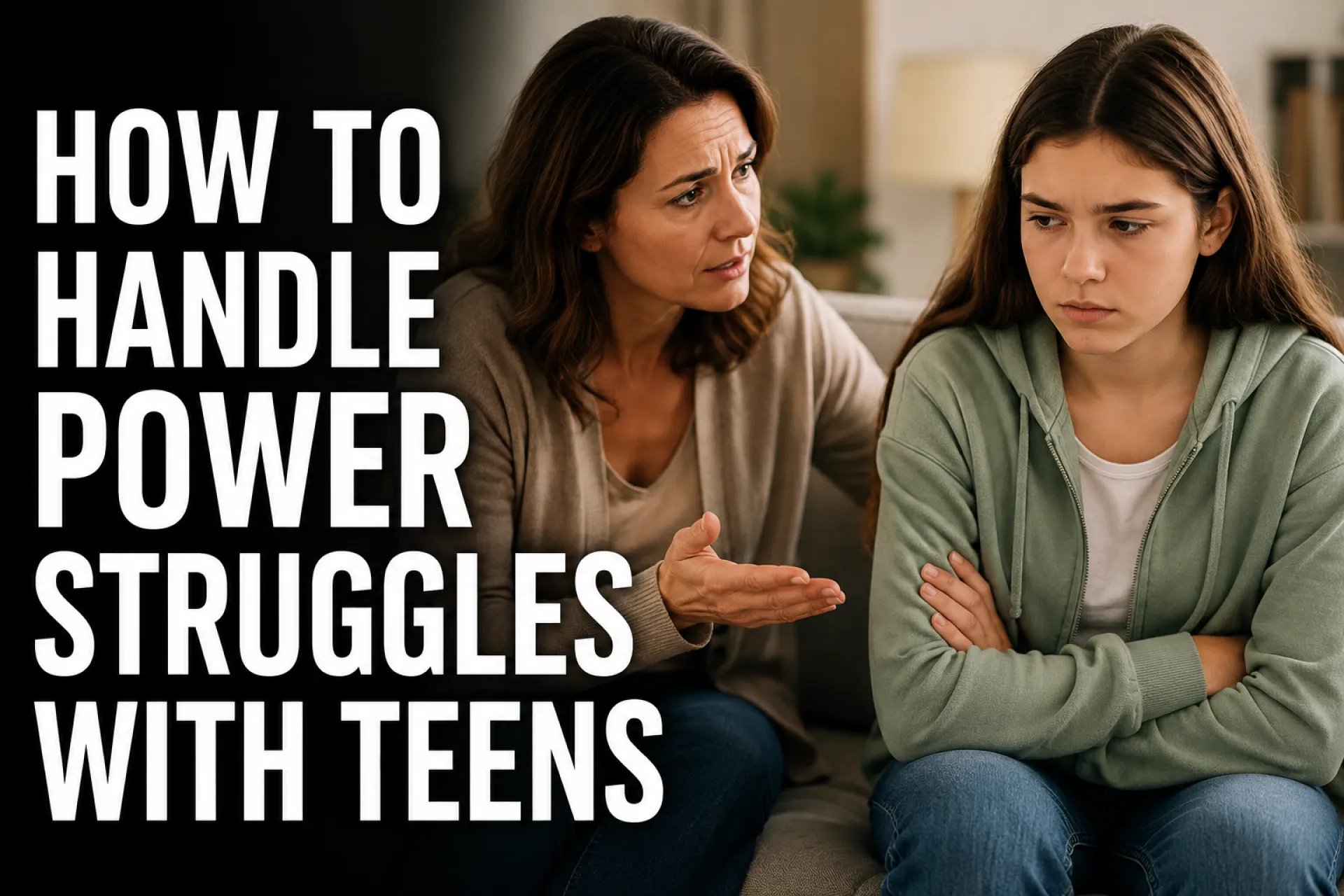
Power struggles occur when parents and teenagers become locked in a battle over control, authority, decisions, or behavior. Instead of solving the problem, both sides become focused on winning the argument.
Common examples include:
- Refusing to complete homework
- Breaking curfew
- Excessive screen time
- Household chores
- Clothing choices
- Social media use
- Friendships
- Driving privileges
- Academic performance
In many situations, the issue itself becomes less important than the struggle for control.
For example:
Parent: "Turn off your phone now."
Teen: "No."
Parent: "I said now."
Teen: "You can't make me."
At this point, the conversation has shifted from phone usage to a power battle.
Understanding how to handle power struggles with teens begins with recognizing when a disagreement is turning into a fight over authority.
Why Do Teens Engage in Power Struggles?
Understanding the reasons behind teen behavior helps parents respond more effectively.
1. Growing Need for Independence
Adolescence is a developmental period where teens seek greater freedom and decision-making power.
They want:
- More control over their lives
- Greater privacy
- Opportunities to make choices
- Respect for their opinions
When teens feel overly controlled, they may resist even reasonable requests.
2. Brain Development
Teen brains are still developing, particularly the areas responsible for:
- Impulse control
- Emotional regulation
- Long-term planning
- Decision-making
This means teens may react emotionally before thinking logically.
3. Desire for Identity
Teenagers are working to establish who they are as individuals.
Sometimes disagreement becomes a way to:
- Express independence
- Test boundaries
- Develop personal values
4. Need for Respect
Many teens report feeling misunderstood or dismissed.
When they believe their opinions don't matter, they may become more argumentative and resistant.
Why Traditional Discipline Often Makes Power Struggles Worse
Many parents unintentionally escalate conflicts by relying on:
- Yelling
- Threats
- Lectures
- Punishments without discussion
- Constant criticism
These approaches can trigger defensiveness and rebellion.
For example:
Instead of hearing:
"I care about your success."
A teen may hear:
"You don't trust me."
The result is often more resistance, not cooperation.
Parents who learn how to handle power struggles with teens focus on relationship-building rather than winning arguments.
Signs You're in a Power Struggle
You may be caught in a power struggle if:
- Conversations frequently become arguments
- Both sides repeat themselves
- Voices become louder
- Nobody listens
- The original issue gets forgotten
- Someone must "win"
- Both people leave feeling angry
Recognizing these warning signs allows you to change course before conflict escalates.
1. Stay Calm and Regulate Your Emotions
One of the most effective parenting strategies is maintaining emotional control.
When parents react with anger:
- Teens become defensive
- Arguments intensify
- Communication shuts down
Before responding:
- Take a deep breath
- Lower your voice
- Pause before speaking
- Focus on the goal rather than the emotion
A calm parent can help calm an emotional teen.
Remember:
Your emotional regulation teaches your teen emotional regulation.
2. Pick Your Battles Wisely
Not every disagreement deserves a fight.
Ask yourself:
- Is this issue about safety?
- Is it about health?
- Does it affect long-term well-being?
- Will it matter next month?
If the answer is no, consider letting it go.
Examples of issues often worth flexibility:
- Hair style
- Fashion choices
- Bedroom decorations
- Music preferences
Examples worth addressing:
- Substance use
- Dangerous behavior
- School attendance
- Driving safety
Choosing your battles reduces unnecessary conflict and preserves your influence.
3. Focus on Connection Before Correction
Research consistently shows that strong parent-teen relationships improve cooperation.
Before correcting behavior:
- Listen first
- Show empathy
- Acknowledge feelings
Instead of:
"Stop being lazy."
Try:
"It seems like you're overwhelmed. What's making homework difficult lately?"
Connection creates trust.
Trust creates cooperation.
4. Give Teens Appropriate Choices
Teenagers need opportunities to exercise independence.
Offering choices helps satisfy this developmental need.
Instead of:
"Clean your room right now."
Try:
"Would you rather clean your room before dinner or after dinner?"
Both options achieve the goal while giving the teen some control.
This simple strategy significantly reduces resistance.
5. Avoid Power Statements
Certain phrases automatically trigger defensiveness.
Examples include:
- "Because I said so."
- "You'll do it because I'm the parent."
- "End of discussion."
- "You have no choice."
While parents ultimately have authority, these statements often escalate conflict.
Instead, explain your reasoning calmly.
For example:
"I understand you want to stay out later, but my responsibility is to make sure you're safe."
Respectful communication encourages respectful responses.
6. Use Active Listening
Many teens simply want to feel heard.
Active listening involves:
- Making eye contact
- Avoiding interruptions
- Reflecting feelings
- Asking questions
Example:
Teen: "You never trust me."
Parent: "It sounds like you're feeling frustrated because you want more independence."
This doesn't mean you agree.
It means you understand.
Feeling understood often reduces emotional intensity.
7. Set Clear and Consistent Boundaries
Healthy parenting combines warmth with structure.
Teens need:
- Predictable rules
- Clear expectations
- Consistent consequences
For example:
If curfew is 10 PM, the expectation should remain consistent.
Changing rules based on mood creates confusion and conflict.
Consistency builds trust.
8. Use Natural Consequences Whenever Possible
Natural consequences often teach better than punishments.
Example:
If a teen forgets homework, they may receive a lower grade.
If they spend all their allowance, they must wait until the next payment.
Natural consequences encourage responsibility without turning parents into enforcers.
9. Don't Argue When Emotions Are High
Timing matters.
Attempting to solve problems during intense emotional moments rarely works.
When emotions rise:
- Pause the conversation
- Take a break
- Return later
You might say:
"We're both upset right now. Let's talk about this after dinner."
This prevents unnecessary escalation.
10. Model Respectful Behavior
Teenagers learn more from what parents do than what parents say.
Ask yourself:
- Do I listen respectfully?
- Do I apologize when I'm wrong?
- Do I manage my emotions effectively?
Parents who model healthy communication often see similar behaviors develop in their teens.
How to Handle Power Struggles About Screen Time
Screen time is one of the most common sources of conflict.
Helpful strategies include:
- Create family technology rules together
- Set clear limits beforehand
- Explain reasons behind boundaries
- Use technology-free zones
- Focus on balance rather than punishment
Instead of sudden restrictions, involve teens in creating solutions.
Collaboration increases compliance.
How to Handle Power Struggles About School
Academic disagreements can quickly become stressful.
Avoid:
- Constant reminders
- Daily lectures
- Comparing siblings
Instead:
- Discuss goals together
- Ask what support they need
- Encourage responsibility
- Focus on effort as well as results
When teens feel ownership of their education, motivation often improves.
How to Handle Power Struggles About Curfew
Curfew disagreements often reflect a teen's desire for independence.
Approach these discussions by:
- Listening to concerns
- Explaining safety considerations
- Being willing to negotiate reasonable adjustments
- Linking privileges to responsibility
Flexibility paired with accountability works better than rigid control.
Mistakes Parents Should Avoid
Trying to Win Every Argument
Winning an argument can sometimes mean losing connection.
Focus on long-term relationships rather than short-term victories.
Taking Defiance Personally
Teen resistance is often developmental, not personal.
Their behavior usually reflects their growth process rather than a lack of love or respect.
Overreacting
Responding with excessive punishment can create resentment and further conflict.
Constant Criticism
Frequent negative feedback damages self-esteem and relationships.
Aim to notice positive behavior regularly.
When Professional Help May Be Needed
Sometimes power struggles become severe and persistent.
Consider seeking professional support if:
- Conflicts become aggressive
- Communication completely breaks down
- School performance significantly declines
- Substance use becomes a concern
- Mental health symptoms emerge
- Family stress feels overwhelming
A licensed family therapist or adolescent counselor can help improve communication and resolve ongoing conflict.
Seeking support is a proactive step toward healthier family relationships.
Building a Strong Relationship Beyond Conflict
The strongest protection against chronic power struggles is a positive parent-teen relationship.
Spend regular time together by:
- Sharing meals
- Taking walks
- Watching movies
- Driving together
- Participating in hobbies
Small moments of connection create trust over time.
When teens feel connected, they are more likely to accept guidance and respect boundaries.
Frequently Asked Questions
How do I stop arguing with my teenager?
Focus on staying calm, listening actively, offering choices, and avoiding emotional reactions. Prioritize problem-solving rather than winning.
Are power struggles normal during adolescence?
Yes. Power struggles are a common part of adolescent development as teens seek independence and identity.
Should parents give in during a power struggle?
Not necessarily. Instead of giving in or becoming more controlling, aim for collaborative solutions that respect both the teen's needs and family expectations.
Why does my teenager challenge everything I say?
Questioning authority is often part of healthy development. Teens are learning to think independently and form their own beliefs.
Can power struggles damage parent-child relationships?
Chronic unresolved conflict can strain relationships. However, respectful communication, empathy, and consistency can strengthen family bonds even during difficult periods.
Final Thoughts
Learning how to handle power struggles with teens is not about gaining control over your child. It is about creating a relationship built on mutual respect, trust, communication, and healthy boundaries.
Every disagreement presents an opportunity to teach problem-solving, emotional regulation, responsibility, and respect. By staying calm, listening carefully, choosing battles wisely, and focusing on connection, parents can transform power struggles into valuable learning experiences.
The goal is not raising a perfectly obedient teenager. The goal is raising a capable, responsible, emotionally healthy young adult who feels respected, understood, and supported.
When parents lead with empathy and consistency, power struggles gradually become opportunities for growth rather than ongoing battles.