

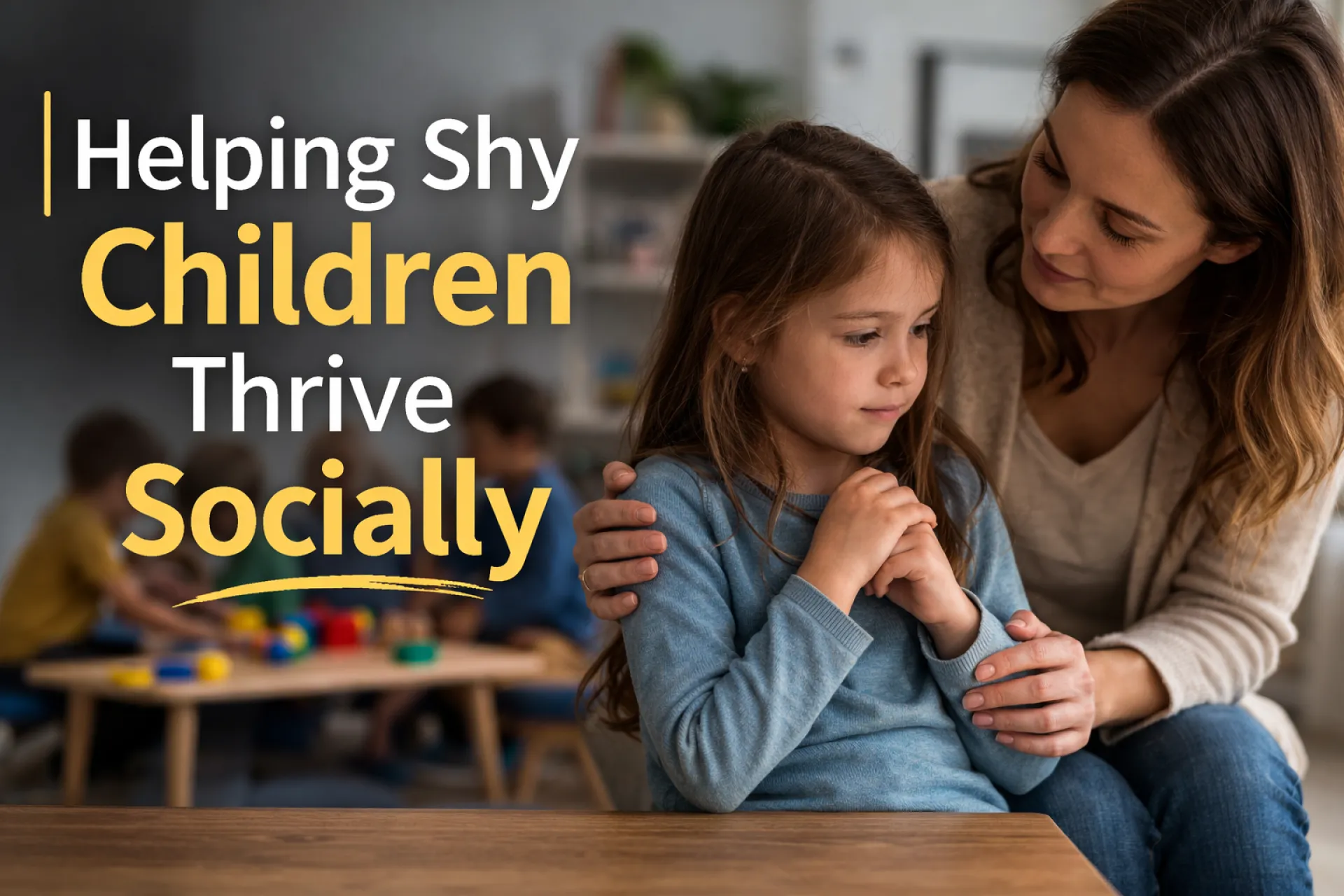
If you’re searching for practical, trustworthy advice on Helping Shy Children Thrive Socially, you’re not alone. Many parents across the United States, United Kingdom, Canada, and Australia worry about their child’s quiet nature especially in school, social gatherings, or extracurricular activities.
Shyness is common in childhood. In fact, research suggests that about 20–40% of children naturally have a more reserved temperament. But here’s the good news: shyness is not a flaw, and it’s not something that needs to be “fixed.” With the right guidance, support, and strategies, shy children can develop strong social skills, healthy self-confidence, and meaningful friendships.
This in-depth guide on Helping Shy Children Thrive Socially is designed using an evidence-based, EEAT (Experience, Expertise, Authoritativeness, Trustworthiness) approach and aligns with YMYL (Your Money or Your Life) content standards. That means you’ll find practical, responsible, and psychologically sound advice you can trust.
Understanding Shyness in Children
Before focusing on Helping Shy Children Thrive Socially, it’s essential to understand what shyness really is.
Shyness is typically:
-
Discomfort or hesitation in new social situations
-
Fear of being judged or embarrassed
-
Preference for observing before participating
-
Slower warm-up in group environments
It is not:
-
A behavioral disorder
-
Poor parenting
-
Lack of intelligence
-
A permanent limitation
Many shy children are highly observant, empathetic, creative, and emotionally intelligent. The goal of Helping Shy Children Thrive Socially is not to change their personality but to equip them with tools to navigate social environments confidently.
Shyness vs. Social Anxiety: When to Seek Professional Help
In the US and other first-tier countries, parents are increasingly aware of childhood mental health. While mild shyness is normal, social anxiety disorder may require professional support.
Signs that suggest you may need to consult a licensed pediatrician or child psychologist include:
-
Intense fear before school or social events
-
Physical symptoms (stomachaches, headaches) before social interaction
-
Refusal to attend school or activities
-
Extreme distress that interferes with daily life
If these symptoms persist for months, speak with a healthcare provider. Early intervention improves outcomes.
Why Helping Shy Children Thrive Socially Matters
Strong social skills impact:
-
Academic performance
-
Emotional resilience
-
Long-term career success
-
Relationship quality
-
Mental health stability
In countries like the US, UK, Canada, and Australia where classroom participation and teamwork are emphasized supporting shy children early can significantly shape their confidence and life opportunities.
Helping shy children thrive socially is about building:
-
Communication skills
-
Emotional regulation
-
Self-esteem
-
Healthy peer relationships
1. Accept and Normalize Your Child’s Temperament
One of the most powerful steps in Helping Shy Children Thrive Socially is simple acceptance.
Avoid statements like:
-
“Why are you so quiet?”
-
“Go talk to them!”
-
“Don’t be shy.”
Instead, try:
-
“It’s okay to take your time.”
-
“You can join when you feel ready.”
-
“I’m proud of how you tried.”
Children internalize labels. When they feel accepted rather than pressured, they develop secure confidence.
2. Build Social Skills at Home First
Before expecting your child to thrive at school or in public, practice in safe environments.
Practice Role-Playing
Role-play scenarios such as:
-
Introducing themselves
-
Asking to join a game
-
Ordering food at a restaurant
-
Answering a teacher’s question
Keep it playful and supportive.
Teach Conversation Starters
Simple scripts can empower shy kids:
-
“Hi, can I play too?”
-
“What game are you playing?”
-
“I like your backpack!”
These small tools are foundational in helping shy children thrive socially.
3. Use Gradual Exposure (Step-by-Step Confidence Building)
Sudden pressure can backfire. Instead, use gradual exposure.
For example:
Step 1: Play with one familiar friend at home
Step 2: Attend a small birthday party
Step 3: Join a small group activity
Step 4: Participate in a larger event
Gradual exposure helps the nervous system adapt without overwhelming your child.
4. Encourage Structured Activities
Structured environments reduce unpredictability, which is often stressful for shy children.
Great options include:
-
Art classes
-
Music lessons
-
Martial arts
-
STEM clubs
-
Library programs
-
Small sports teams
Structured activities provide:
-
Clear roles
-
Predictable routines
-
Shared goals
-
Adult supervision
These factors significantly support shy children in social growth.
5. Model Confident Social Behavior
Children learn through observation.
If you demonstrate:
-
Friendly greetings
-
Active listening
-
Calm conflict resolution
-
Polite communication
Your child absorbs these skills naturally.
You can even narrate your social thinking:
-
“I felt nervous meeting someone new, so I smiled and introduced myself.”
This normalizes social discomfort.
6. Strengthen Emotional Intelligence
Helping shy children thrive socially includes teaching emotional literacy.
Help them identify:
-
Nervousness
-
Excitement
-
Embarrassment
-
Confidence
Teach coping tools like:
-
Deep breathing
-
Positive self-talk
-
Visualization
-
Grounding exercises
Example self-talk:
-
“I can try.”
-
“It’s okay to be nervous.”
-
“I’ve done this before.”
Emotional regulation is a lifelong asset.
7. Partner With Teachers
In US and UK schools especially, classroom participation often influences performance.
Communicate with your child’s teacher about:
-
Participation anxiety
-
Gradual engagement plans
-
Alternative ways to contribute
-
Positive reinforcement
Many educators are trained to support diverse temperaments and will collaborate when informed.
8. Avoid Overprotection
It’s natural to want to rescue your child from discomfort. But stepping in too quickly can reinforce fear.
Instead of speaking for them, try:
-
“Would you like to tell her yourself?”
-
“I’ll stay beside you while you ask.”
Support without replacing their effort.
9. Celebrate Effort, Not Outcome
Focus on courage rather than performance.
Praise:
-
“You said hello today.”
-
“You tried raising your hand.”
-
“You joined the group for five minutes.”
Small wins build lasting confidence.
10. Reduce Digital Isolation
In first-tier countries, screen time can replace real-world interaction.
Encourage:
-
Playdates
-
Outdoor activities
-
Community groups
-
Family social events
Balanced social exposure strengthens real-world communication skills.
Long-Term Benefits of Helping Shy Children Thrive Socially
When supported appropriately, shy children often grow into:
-
Thoughtful leaders
-
Deep thinkers
-
Compassionate friends
-
Excellent listeners
-
Strong problem-solvers
Many successful adults describe themselves as shy children who learned confidence over time.
Shyness can evolve into quiet strength.
Common Parenting Mistakes to Avoid
When focusing on helping shy children thrive socially, avoid:
-
Labeling them publicly
-
Comparing them to outgoing siblings
-
Forcing large social situations
-
Mocking nervous behavior
-
Dismissing their fears
Validation builds trust.
Evidence-Based Parenting Principles
This guide reflects principles supported by:
-
Developmental psychology research
-
Pediatric behavioral health guidelines
-
Cognitive behavioral techniques
-
Attachment theory
Parents should always consult licensed healthcare providers for persistent concerns.
When to Consider Therapy
Professional support may help if:
-
Shyness severely limits daily functioning
-
There is school refusal
-
Panic symptoms occur
-
Bullying impacts self-esteem
Cognitive Behavioral Therapy (CBT) is often effective for social anxiety in children.
Frequently Asked Questions (SEO-Optimized)
Is shyness genetic?
Temperament has biological components, but environment strongly shapes social development.
Can shy children become confident adults?
Yes. With guidance, most shy children develop strong social skills.
Should I force my child to socialize?
No. Gentle encouragement works better than force.
At what age should I worry about extreme shyness?
If it interferes with school or daily functioning beyond age 5–6, consult a pediatric professional.
A Parent’s Mindset Shift
Instead of asking:
“How do I make my child less shy?”
Try asking:
“How can I help my child feel safe, capable, and confident?”
That mindset change is central to Helping Shy Children Thrive Socially.
Final Thoughts: Confidence Grows Over Time
Helping shy children thrive socially is a journey not a quick fix.
With patience, emotional safety, and consistent encouragement, shy children develop:
-
Social confidence
-
Emotional resilience
-
Strong communication skills
-
Healthy independence
If you’re parenting a shy child, remember this:
Your child doesn’t need to become louder.
They need to feel secure.
And security builds confidence.