

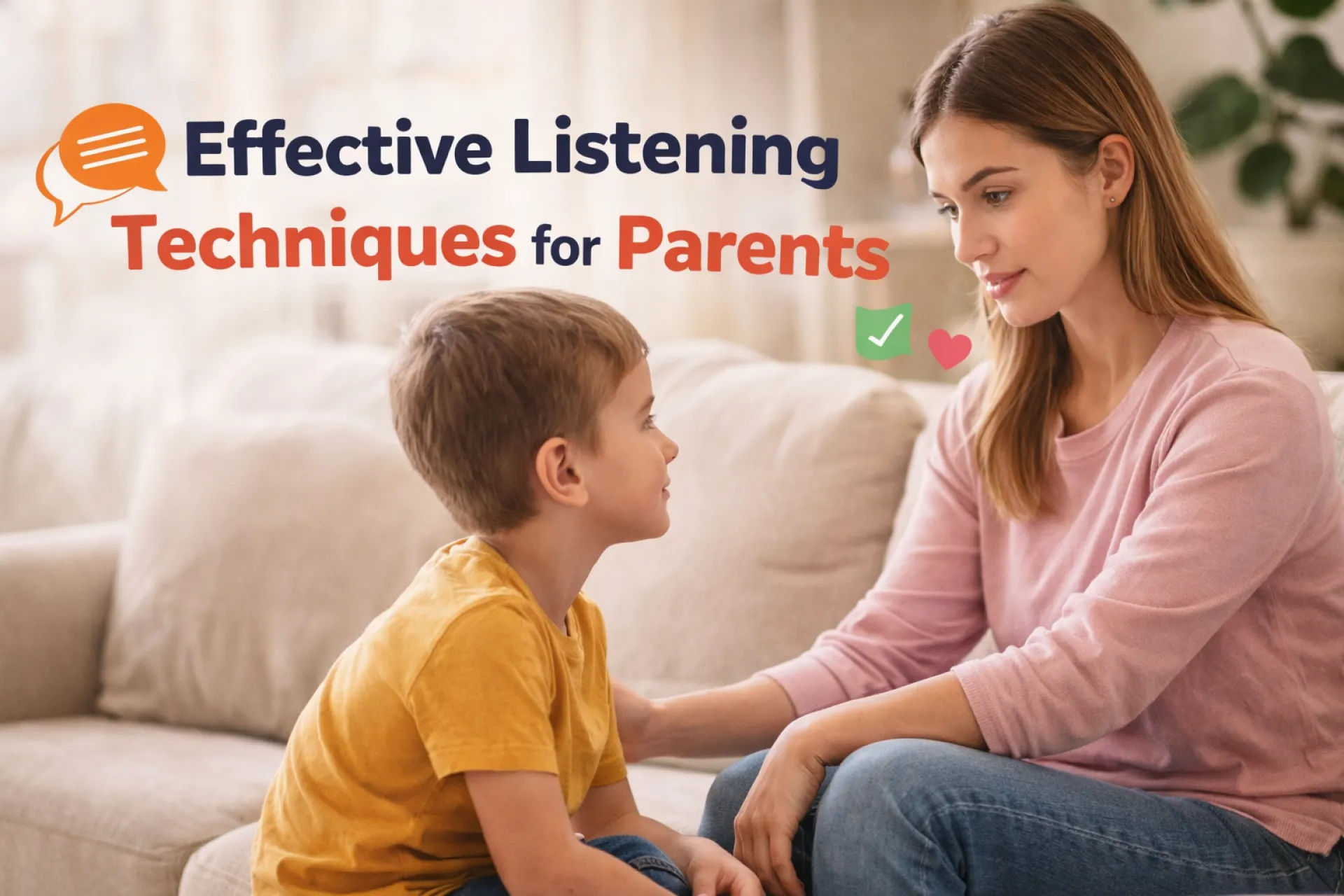
Many parents focus on teaching, advising, or correcting their children. While guidance is important, listening is often the most powerful tool for understanding a child’s emotional needs.
Children who feel heard are more likely to:
-
Develop strong emotional intelligence
-
Build trust with their parents
-
Express concerns before problems escalate
-
Develop healthy self-confidence
-
Communicate effectively in adulthood
In contrast, when children feel ignored or misunderstood, they may withdraw emotionally or seek validation elsewhere.
That’s why learning effective listening techniques for parents is essential for building long-term trust and healthy relationships.
Understanding the Difference Between Hearing and Listening
One of the first steps in practicing effective listening techniques for parents is understanding the difference between hearing and listening.
Hearing
Hearing is simply the physical act of perceiving sound.
Listening
Listening is an intentional process that involves:
-
Paying full attention
-
Understanding the message
-
Interpreting emotions
-
Responding thoughtfully
Children often communicate more through emotions than words. When parents practice true listening, they begin to understand what their child is really trying to say.
The Impact of Good Listening on Child Development
Research in child development consistently shows that children thrive when they feel emotionally supported.
Practicing effective listening techniques for parents can help children develop important life skills, including:
Emotional regulation
When parents acknowledge children’s feelings, kids learn how to manage their emotions more effectively.
Stronger self-esteem
Children who feel heard believe their opinions matter.
Better problem-solving skills
Open communication encourages children to discuss challenges and explore solutions.
Improved mental health
Listening reduces feelings of loneliness, anxiety, and frustration in children.
For families across high-income countries like the U.S., Canada, the UK, and Australia, where children often face academic and social pressures, strong communication becomes even more valuable.
1. Practice Active Listening
Active listening is one of the most important effective listening techniques for parents.
It means giving your full attention to your child without distractions.
How to practice active listening
-
Maintain eye contact
-
Put away phones or digital devices
-
Avoid interrupting
-
Nod or respond with small verbal cues like “I see” or “That makes sense”
For example, if your child talks about a difficult day at school, avoid multitasking. Focus completely on the conversation.
This simple act makes children feel valued and respected.
2. Validate Your Child’s Feelings
Many parents instinctively try to fix problems immediately. However, children often just want their feelings acknowledged.
Validating emotions is one of the most powerful effective listening techniques for parents.
Examples of validation
Instead of saying:
“Don’t worry about it.”
Try saying:
“That sounds really frustrating. I understand why you feel upset.”
Validation does not mean agreeing with every concern it simply shows empathy and understanding.
3. Ask Open-Ended Questions
Encouraging deeper conversations is another key aspect of effective listening techniques for parents.
Open-ended questions allow children to express themselves freely.
Examples of open-ended questions
-
“What was the best part of your day?”
-
“How did that situation make you feel?”
-
“What do you think could help next time?”
-
“What happened after that?”
These questions invite thoughtful responses rather than simple yes-or-no answers.
4. Avoid Immediate Judgment or Criticism
Children are less likely to share openly if they expect criticism.
A major part of effective listening techniques for parents is creating a safe space for honest conversations.
Helpful strategies
-
Pause before reacting
-
Avoid raising your voice
-
Focus on understanding rather than blaming
When children know they won’t be judged, they become more comfortable discussing mistakes and challenges.
5. Reflect Back What Your Child Says
Reflective listening helps ensure that you truly understand your child’s message.
It is one of the most effective effective listening techniques for parents used by child psychologists and counselors.
Example
Child:
“I hate math class. It’s too hard.”
Parent:
“It sounds like math has been really frustrating for you lately.”
This technique reassures children that their feelings are recognized.
6. Pay Attention to Non-Verbal Communication
Children often communicate emotions through body language.
Learning to observe non-verbal signals is another important part of effective listening techniques for parents.
Watch for signs such as:
-
Avoiding eye contact
-
Slumped posture
-
Quiet responses
-
Sudden irritability
These behaviors may indicate stress, sadness, or anxiety.
Parents who notice these signals can gently ask questions and offer support.
7. Be Patient During Conversations
Children sometimes take time to explain their thoughts.
One of the overlooked effective listening techniques for parents is patience.
Avoid rushing conversations or finishing sentences for your child.
Allow pauses and silence if needed.
Patience communicates respect and gives children space to organize their thoughts.
8. Create Regular Family Conversation Time
Busy schedules can limit opportunities for meaningful discussions.
Creating intentional communication time is an excellent example of effective listening techniques for parents.
Ideas for conversation time
-
Family dinners without screens
-
Evening walks together
-
Bedtime chats
-
Weekend family activities
Consistent conversations strengthen family bonds and encourage open communication.
9. Model Good Listening Behavior
Children learn communication habits from their parents.
Demonstrating good listening skills is one of the most influential effective listening techniques for parents.
Modeling includes
-
Listening respectfully to others
-
Avoiding interruptions
-
Showing empathy in conversations
-
Apologizing if you misunderstand someone
When parents model these behaviors, children naturally adopt them.
10. Stay Calm During Difficult Conversations
Children may sometimes share things that surprise or worry parents.
Remaining calm is one of the most important effective listening techniques for parents.
Reacting with anger or panic can shut down communication.
Instead, try to:
-
Take a deep breath
-
Thank your child for sharing
-
Focus on problem-solving together
Calm responses build trust and encourage future conversations.
Common Listening Mistakes Parents Should Avoid
Even well-intentioned parents can fall into habits that block communication.
Avoid these common mistakes:
Interrupting too quickly
Let children finish their thoughts.
Offering immediate solutions
Sometimes children only want empathy.
Minimizing feelings
Statements like “You’re overreacting” can damage trust.
Multitasking during conversations
Children notice when parents are distracted.
Recognizing these mistakes helps parents improve their listening habits.
The Long-Term Benefits of Strong Parent-Child Communication
Learning effective listening techniques for parents offers lifelong benefits for children.
Children who grow up in supportive communication environments are more likely to:
-
Develop strong emotional intelligence
-
Build healthy relationships
-
Handle stress effectively
-
Seek help when facing problems
-
Maintain open communication with parents into adulthood
These skills are especially important in today’s complex world, where children face social pressures, academic demands, and digital influences.
When Parents Should Seek Professional Guidance
Sometimes communication challenges persist despite parents’ best efforts.
If a child frequently withdraws, experiences anxiety, or struggles with emotional regulation, professional support may be helpful.
Consulting professionals such as family therapists, school counselors, or pediatric mental health specialists can provide valuable guidance.
Seeking support is a proactive step toward improving family communication and emotional well-being.
Final Thoughts: Listening Is the Heart of Parenting
Parenting advice often focuses on discipline, education, or behavior management. However, listening remains one of the most powerful tools parents have.
Practicing effective listening techniques for parents helps children feel respected, supported, and understood.
By listening with empathy, patience, and attention, parents can build stronger relationships and guide their children through life’s challenges with confidence.
Small changes in communication habits can make a significant difference in a child’s emotional development and family harmony.