

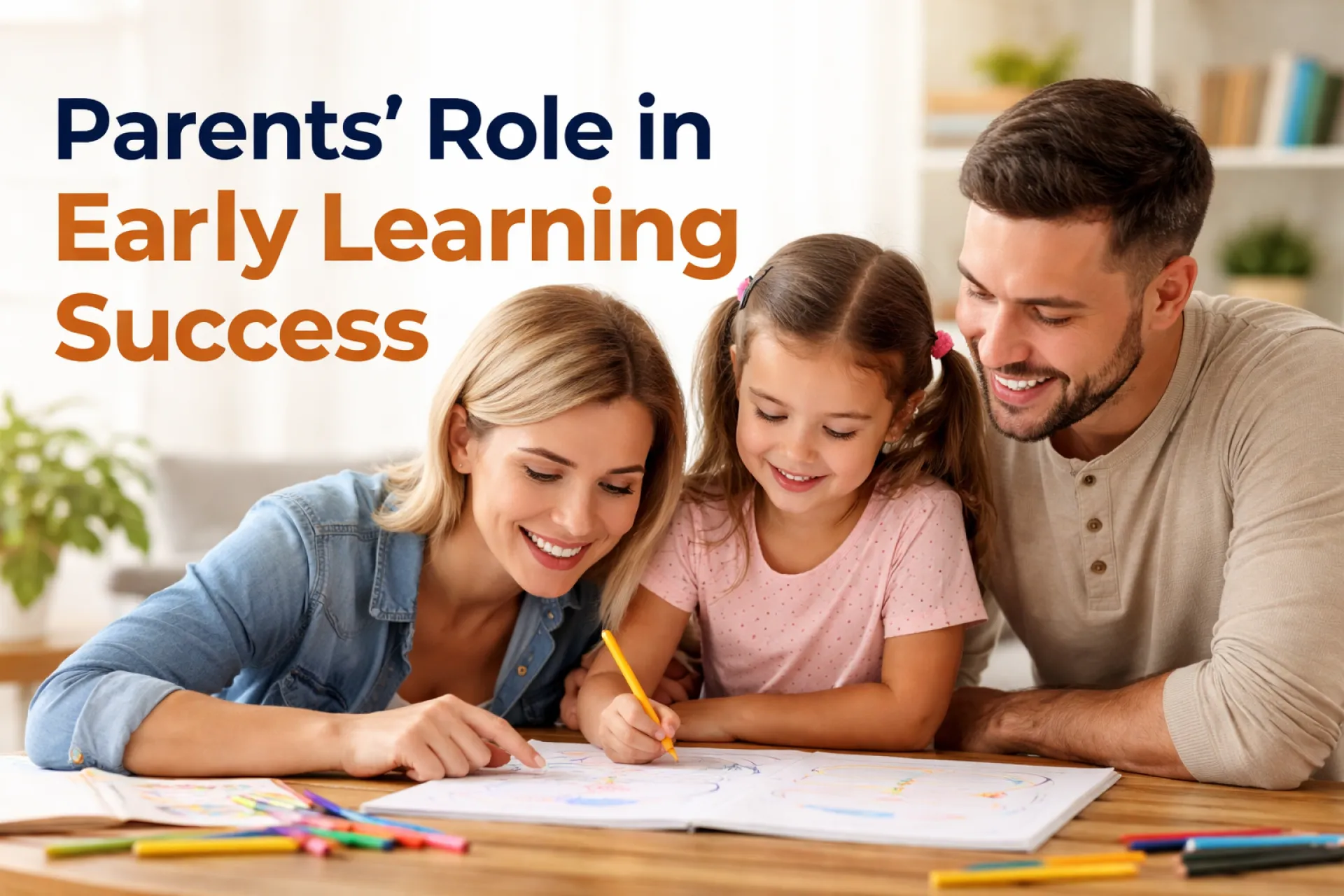
Early childhood, particularly from birth to age 5, is a critical period of brain development. During this time, neural connections form rapidly, shaping how children think, feel, and learn.
Studies show that children who receive strong early support at home are more likely to:
-
Perform better academically
-
Develop strong communication skills
-
Exhibit better emotional regulation
-
Build resilience and confidence
Parents’ Role in Early Learning Success goes beyond teaching alphabets or numbers—it involves creating an environment that fosters curiosity, safety, and exploration.
Understanding Parents’ Role in Early Learning Success
Parents are a child’s first teachers. Long before formal schooling begins, children learn by observing, imitating, and interacting with their caregivers.
Key Responsibilities of Parents
-
Creating a safe and supportive environment
-
Encouraging curiosity and exploration
-
Building language and communication skills
-
Supporting emotional development
-
Modeling positive behavior
When parents are actively involved, children develop a strong foundation that supports both academic and life success.
Creating a Learning-Friendly Home Environment
A structured yet flexible home environment plays a crucial role in early learning.
1. Design a Dedicated Learning Space
You don’t need a large house or expensive tools. A small, quiet corner with books, crayons, puzzles, and educational toys can make a big difference.
2. Limit Distractions
Reduce excessive screen time and create opportunities for hands-on learning. Interactive play is far more beneficial than passive screen consumption.
3. Establish Daily Routines
Consistency helps children feel secure and improves their ability to focus. Include time for reading, play, meals, and rest.
The Power of Reading in Early Childhood
Reading is one of the most effective ways parents can support early learning success.
Benefits of Reading Together
-
Enhances vocabulary and language skills
-
Improves listening and comprehension
-
Strengthens parent-child bonding
-
Encourages imagination and creativity
Practical Tips
-
Read aloud daily, even for 10–15 minutes
-
Use expressive voices and gestures
-
Ask open-ended questions about the story
-
Let your child choose books
Children exposed to books early are more likely to develop strong literacy skills and a love for learning.
Encouraging Play-Based Learning
Play is not just fun,it is essential for cognitive, social, and emotional development.
Types of Play That Support Learning
-
Creative play: Drawing, painting, storytelling
-
Physical play: Running, climbing, dancing
-
Pretend play: Role-playing and imagination
-
Problem-solving play: Puzzles and building blocks
Parents’ Role in Early Learning Success includes allowing children the freedom to explore and learn through play rather than focusing solely on structured academics.
Building Strong Communication Skills
Language development begins at home. The way parents talk, listen, and respond shapes a child’s communication abilities.
Effective Communication Strategies
-
Talk to your child frequently
-
Describe daily activities
-
Encourage questions and curiosity
-
Listen actively without interrupting
Children who grow up in language-rich environments tend to perform better in school and social situations.
Supporting Emotional and Social Development
Emotional intelligence is just as important as academic skills.
How Parents Can Help
-
Validate your child’s feelings
-
Teach empathy and kindness
-
Model healthy emotional responses
-
Encourage sharing and cooperation
Children who feel emotionally secure are more confident learners and better equipped to handle challenges.
The Role of Positive Reinforcement
Encouragement and recognition play a vital role in motivating children.
Best Practices
-
Praise effort, not just results
-
Use specific feedback (e.g., “You worked really hard on that drawing”)
-
Avoid excessive criticism
Positive reinforcement builds self-esteem and encourages a growth mindset.
Balancing Screen Time and Learning
In modern households, managing screen time is a major challenge.
Guidelines for Parents
-
Limit screen time based on age
-
Choose educational, high-quality content
-
Co-view and discuss what your child watches
Too much screen exposure can affect attention, sleep, and social development, making parental guidance essential.
Partnering with Teachers and Schools
Parents’ Role in Early Learning Success extends beyond the home.
Ways to Stay Involved
-
Attend parent-teacher meetings
-
Communicate regularly with educators
-
Support homework and school activities
Collaboration between parents and teachers ensures consistency and better outcomes for children.
Cultural and Socioeconomic Considerations
Families across the US, UK, Canada, and Australia come from diverse cultural and economic backgrounds.
Key Takeaways
-
Learning does not require expensive resources
-
Everyday activities can become learning opportunities
-
Cultural values can enrich a child’s perspective
Parents should focus on meaningful interactions rather than perfection or comparison.
Common Mistakes Parents Should Avoid
Even well-meaning parents can unintentionally hinder early learning.
Avoid These Pitfalls
-
Over-scheduling children
-
Pressuring for academic performance too early
-
Comparing children with others
-
Ignoring emotional needs
A balanced approach is key to long-term success.
Expert Tips for Maximizing Early Learning Success
-
Be consistent but flexible
-
Follow your child’s interests
-
Encourage independence
-
Celebrate small achievements
Parents’ Role in Early Learning Success is not about perfection—it’s about presence, patience, and participation.
Long-Term Impact of Early Parental Involvement
Children who receive strong parental support in early years are more likely to:
-
Graduate from high school and college
-
Develop strong career skills
-
Maintain healthy relationships
-
Exhibit emotional resilience
Investing time in early learning pays lifelong dividends.
Conclusion
Parents’ Role in Early Learning Success is the foundation upon which a child’s future is built. By creating a supportive environment, encouraging curiosity, and actively participating in your child’s development, you can set them on a path toward lifelong success.
Remember, small daily actions reading a story, having a conversation, or playing together can have a lasting impact. You don’t need to be a perfect parent; you just need to be a present and intentional one.