

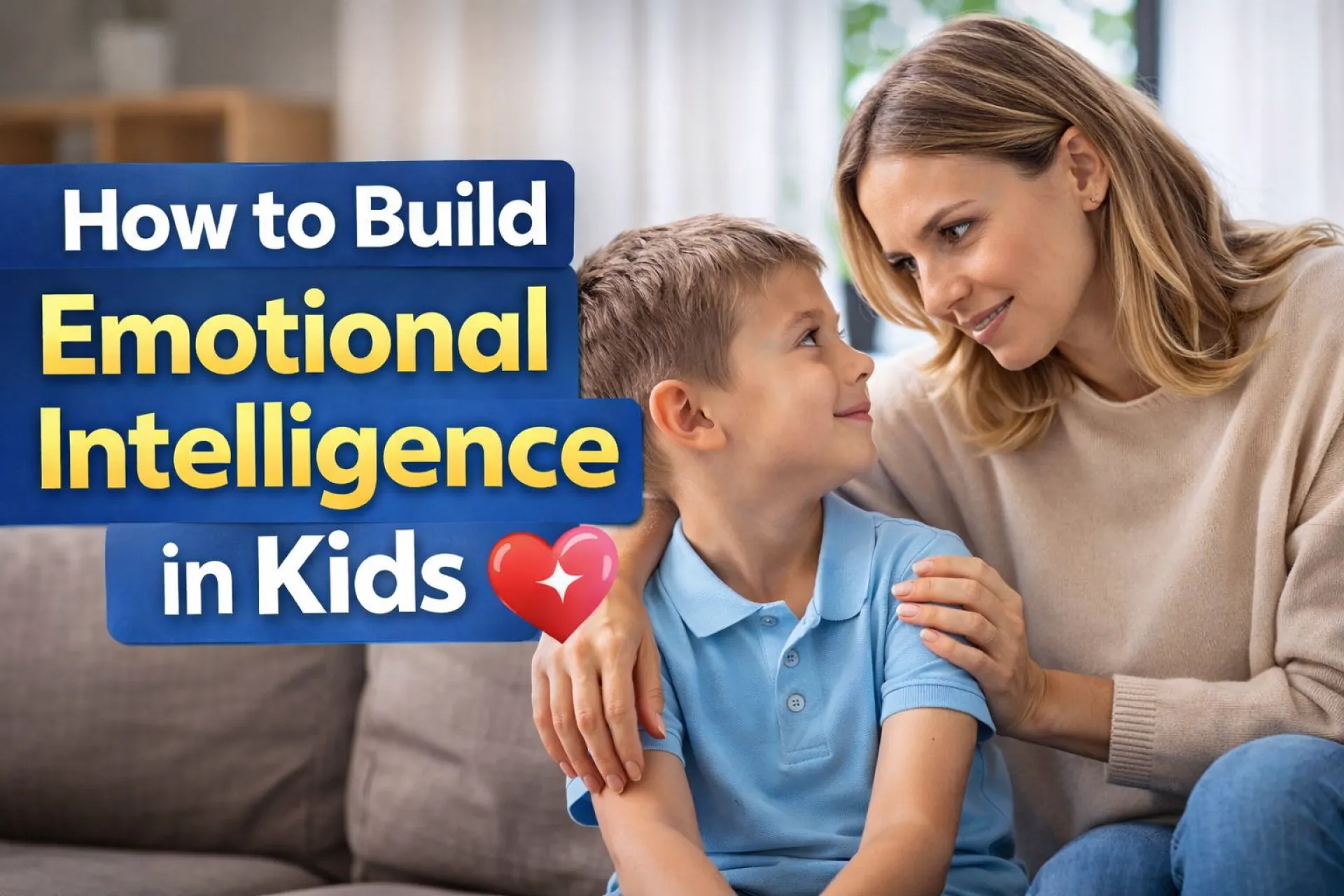
Raising emotionally strong children is just as important as supporting their academic success. In today’s fast-changing world, children need more than good grades they need the ability to understand emotions, communicate effectively, and handle challenges with resilience.
This is where emotional intelligence becomes essential.
If you are wondering how to build emotional intelligence in kids, you’re not alone. Parents across the United States, Canada, the United Kingdom, and Australia are increasingly focusing on social and emotional development to help children thrive both academically and socially.
In this comprehensive guide, we’ll explore practical strategies parents can use to help children develop emotional intelligence, strengthen relationships, and build lifelong confidence.
What Is Emotional Intelligence in Children?
Emotional intelligence (often called EQ) refers to a child’s ability to:
-
Recognize their own emotions
-
Understand the feelings of others
-
Manage emotional reactions
-
Communicate feelings effectively
-
Build healthy relationships
Children with strong emotional intelligence tend to perform better in school, maintain healthier friendships, and cope with stress more effectively.
Many child development experts believe emotional intelligence is one of the most important life skills parents can teach.
Why Emotional Intelligence Matters for Kids
Emotional intelligence influences nearly every aspect of a child’s life.
Research in child psychology suggests that children with higher emotional intelligence are more likely to:
-
Develop strong social skills
-
Build healthy friendships
-
Show empathy and kindness
-
Handle frustration and disappointment
-
Make responsible decisions
In contrast, children who struggle with emotional regulation may experience behavioral problems, social difficulties, or increased anxiety.
Learning how to build emotional intelligence in kids early can help prevent many of these challenges.
Signs of Strong Emotional Intelligence in Children
Before discussing strategies, it’s helpful to recognize what emotional intelligence looks like in children.
Kids with healthy emotional intelligence often:
-
Express their feelings clearly
-
Show empathy when others are upset
-
Apologize when they make mistakes
-
Handle disappointment without extreme reactions
-
Listen to others during conversations
These skills don’t appear automatically they develop through supportive parenting and daily experiences.
How to Build Emotional Intelligence in Kids
Developing emotional intelligence requires patience, guidance, and consistent parenting practices.
Here are proven strategies parents can use to nurture emotional intelligence.
1. Teach Children to Recognize Emotions
The first step in emotional intelligence is learning to identify emotions.
Young children often experience strong feelings but lack the vocabulary to describe them.
Parents can help by naming emotions during everyday situations.
For example:
-
“You seem frustrated because the puzzle is difficult.”
-
“You look excited about your school project.”
This practice helps children connect feelings with words, which improves emotional awareness.
2. Encourage Open Conversations About Feelings
Children need a safe environment where they feel comfortable sharing their emotions.
Parents can build this environment by listening without judgment.
Instead of dismissing feelings, try saying:
“I understand why that made you upset.”
This simple validation teaches children that emotions are normal and manageable.
When kids feel heard, they are more likely to communicate openly in the future.
3. Be a Role Model for Emotional Behavior
Children learn emotional skills by observing their parents.
If parents react calmly during stressful situations, children are more likely to develop similar responses.
For example, instead of reacting with anger when something goes wrong, parents can say:
“I’m feeling frustrated right now, so I’m going to take a deep breath.”
Modeling emotional control shows children how to manage their own feelings.
4. Teach Empathy Through Everyday Experiences
Empathy is a core component of emotional intelligence.
Parents can encourage empathy by asking children to consider how others feel.
For example:
“How do you think your friend felt when that happened?”
This helps children understand different perspectives and develop compassion for others.
Empathy also improves social relationships and conflict resolution skills.
5. Help Kids Manage Big Emotions
Children sometimes experience overwhelming emotions like anger, sadness, or frustration.
Instead of punishing emotional reactions, parents can teach coping strategies such as:
-
Deep breathing
-
Taking a short break
-
Talking about feelings
-
Drawing or writing emotions
These techniques help children regulate emotions rather than suppress them.
6. Encourage Problem-Solving Skills
Emotionally intelligent children learn to handle challenges constructively.
Parents can guide children through problem-solving rather than fixing problems immediately.
For example:
“What do you think we should do to solve this?”
This approach encourages critical thinking and confidence.
Children feel empowered when they participate in solutions.
7. Praise Effort and Emotional Growth
Positive reinforcement helps children understand that emotional development is valuable.
Instead of praising only achievements, parents can acknowledge emotional progress.
For example:
“I’m proud of how you stayed calm during that situation.”
Recognizing emotional effort motivates children to continue developing healthy habits.
8. Teach Healthy Conflict Resolution
Conflict is a natural part of relationships, especially for children learning social skills.
Parents can teach constructive conflict resolution by encouraging:
-
Listening to others
-
Expressing feelings respectfully
-
Finding fair solutions
Learning these skills early helps children navigate friendships and teamwork more effectively.
9. Create Opportunities for Social Interaction
Social experiences play a major role in emotional development.
Activities such as:
-
Team sports
-
Group projects
-
Playdates
-
Community events
allow children to practice communication, cooperation, and empathy.
These interactions strengthen emotional intelligence over time.
10. Practice Mindfulness and Emotional Awareness
Mindfulness activities help children become more aware of their thoughts and feelings.
Simple practices include:
-
Breathing exercises
-
Quiet reflection
-
Gratitude discussions
-
Relaxation techniques
These activities encourage emotional balance and stress management.
The Role of Schools in Emotional Intelligence Development
Schools in countries like the United States, Canada, and the UK increasingly include social-emotional learning (SEL) programs.
These programs focus on skills such as:
-
Emotional awareness
-
Communication
-
Responsible decision-making
-
Relationship building
Parents can support these lessons at home by reinforcing similar values.
Collaboration between families and schools strengthens emotional development.
Common Mistakes Parents Make When Teaching Emotional Intelligence
While trying to help children emotionally, some parenting habits may unintentionally hinder progress.
Common mistakes include:
Ignoring children's emotions
Punishing emotional expression
Overprotecting children from challenges
Solving every problem for them
Expecting perfect emotional control
Emotional intelligence develops gradually, so patience and consistency are key.
Long-Term Benefits of Emotional Intelligence
Teaching emotional intelligence during childhood can have lasting effects throughout life.
Children who develop strong emotional skills are more likely to:
-
Build successful careers
-
Maintain healthy relationships
-
Manage stress effectively
-
Show leadership qualities
-
Make responsible decisions
In fact, many employers today consider emotional intelligence just as valuable as technical skills.
When Parents Should Seek Professional Guidance
Sometimes children may struggle with emotional regulation beyond typical developmental stages.
Parents may consider consulting a child psychologist, counselor, or pediatric specialist if a child consistently shows:
-
Extreme anger or aggression
-
Severe anxiety
-
Social withdrawal
-
Difficulty managing emotions
Professional support can help identify underlying issues and provide tailored strategies.
Practical Daily Activities to Build Emotional Intelligence
Parents can integrate emotional learning into everyday routines.
Simple activities include:
Emotion check-ins during dinner
Discussing feelings after school
Reading books about emotions
Playing cooperative games
Talking about characters' feelings in movies
These small moments create opportunities for emotional learning.
Final Thoughts
Learning how to build emotional intelligence in kids is one of the most valuable investments parents can make in their child’s future.
Emotionally intelligent children are better equipped to manage challenges, form healthy relationships, and succeed in school and life.
The good news is that emotional intelligence is not something children are simply born with it can be developed through guidance, patience, and everyday interactions.
By encouraging open communication, modeling healthy emotional behavior, and teaching empathy, parents can raise confident and emotionally resilient children.
Even small changes in parenting habits can make a powerful difference in a child’s emotional growth.